In Ufa, the capital of the Russian republic of Bashkortostan, also known as Bashkiria, statistics show that around 2500 children have health issues.
However, with a poorly developed infrastructure of social institutions, there is little support for them or their personal development. They are at high risk of becoming isolated and having fewer opportunities and a lower quality of life than their peers.
Fortunately, there is a solid network of libraries, coordinated by the municipal library of Ufa. Driven by the motivation to improve the current situation and help children in need, the library was keen to find innovative and effective ways of providing help to these particularly vulnerable members of the community.
The library staff chose canistherapy, an alternative method to support children with disabilities which is gaining popularity around the world. This is a supportive therapy that uses work with dogs as a form of treatment. It has been proven that spending time with dogs has positive effects on people’s mental, physical, social, and overall health.
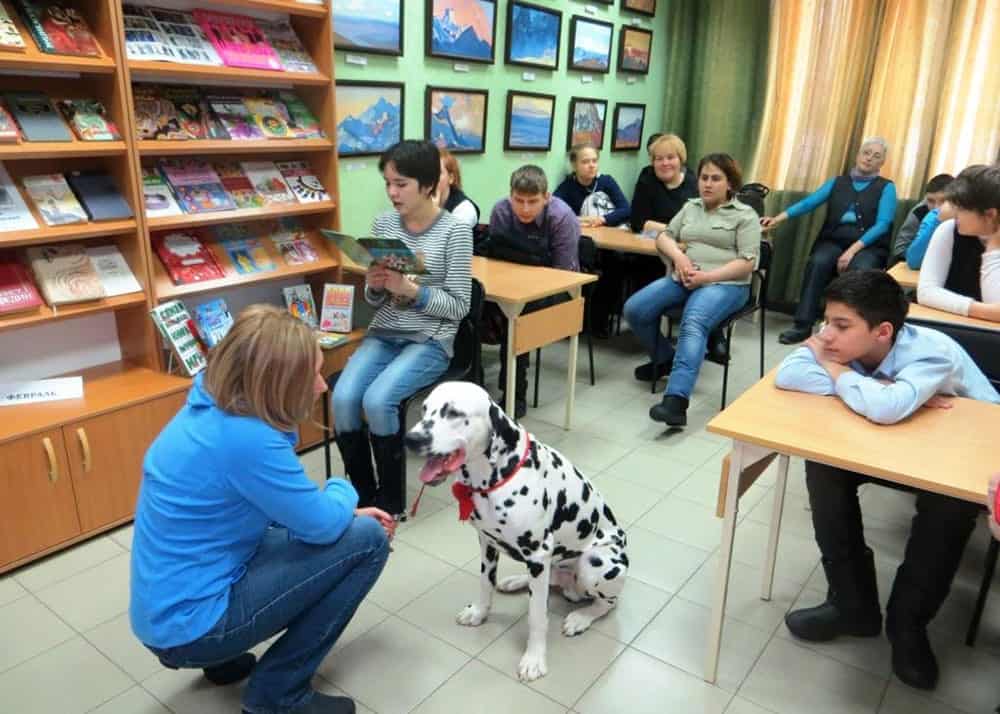
Drawing on its special role as a social community institution, the library launched the project in 2016 in collaboration with dog-lovers from a youth club called “Kind Hands” and gave it the name «Canistherapy. Reading to Dogs». For the local community this is a unique project and a first for Bashkirian libraries.
The project concentrates on providing assistance to children with mental health issues, such as speech and language disorders, mental abnormality or autism, to acquire new communication skills.
The first participants were 18 pupils from the ninth grade of a school for children with special needs. The library has been cooperating with the school for a few years providing different services to these children. The pupils have difficulties with verbal communication as well as language development, and face particular obstacles in reading.
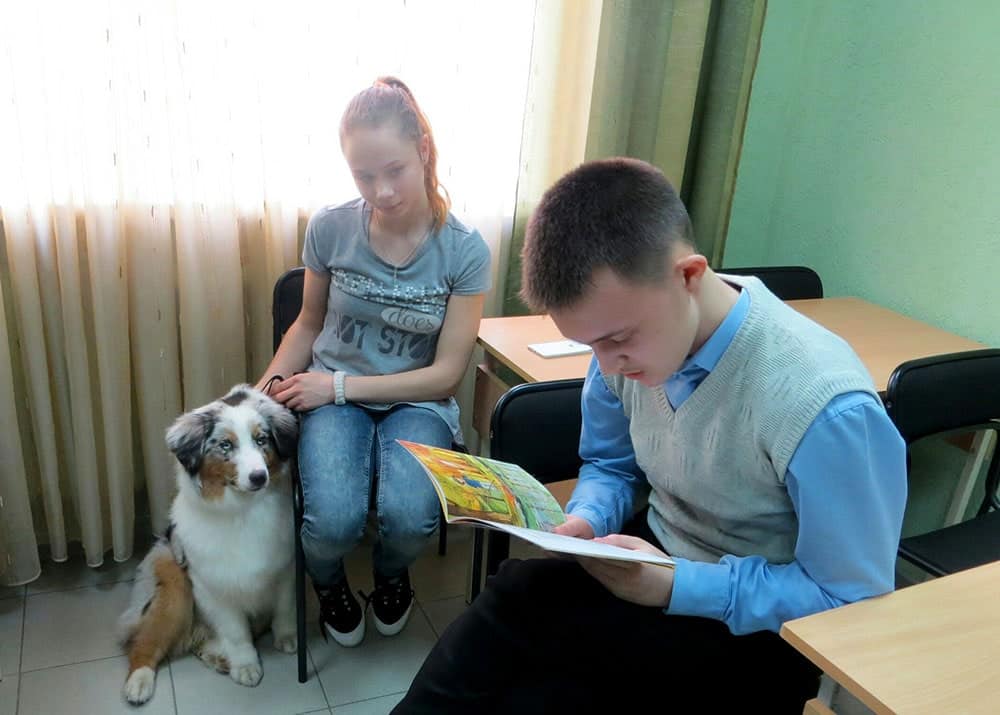
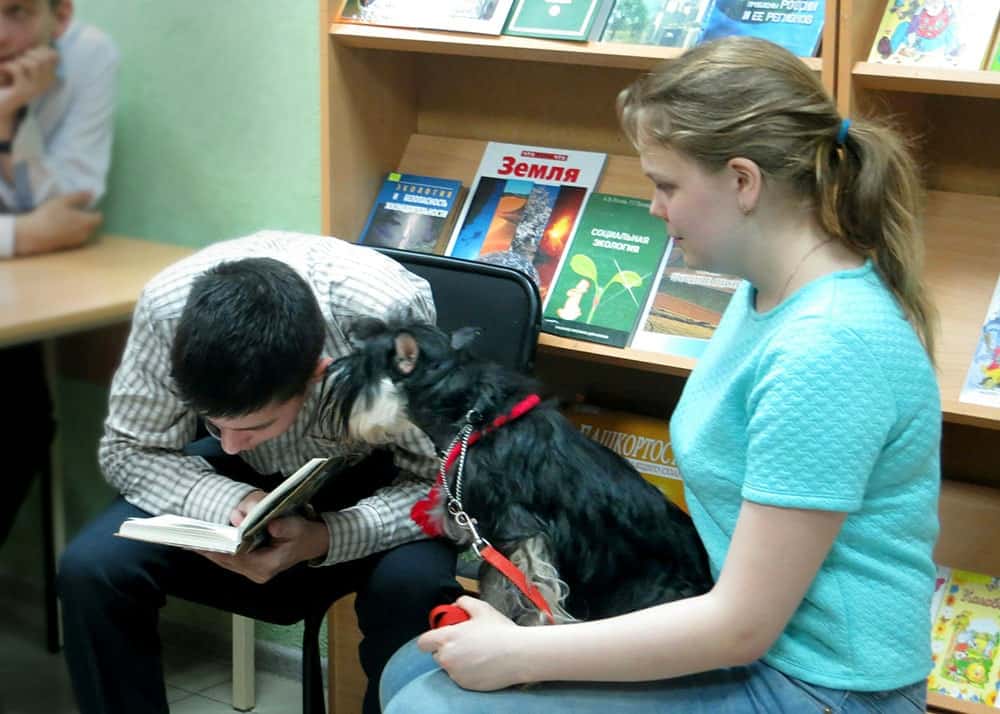
During the lessons, children learn how to communicate with a dog by reading books to them. This allows them to develop their skills for communicating with people.
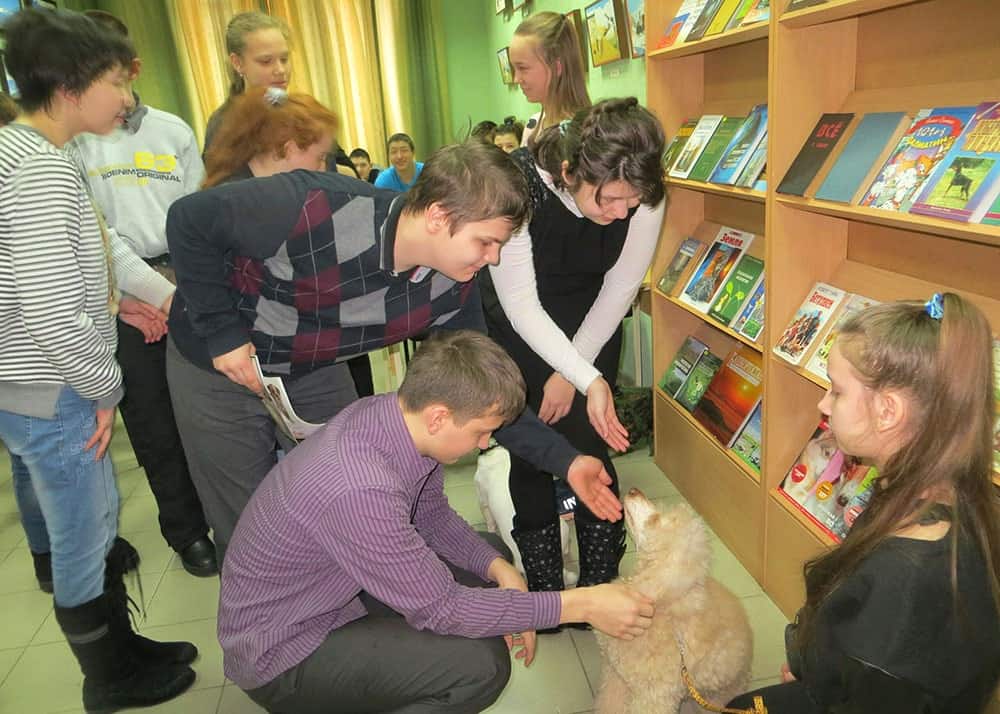
The project has been running for two years and training sessions are held once a week. During the first lessons, the dog owners explain to the children how to behave around dogs. Children are then given an overview of the different breeds.
A teacher from the school for children with special needs notes that at the beginning children used to be afraid of any communication with people. However, after a few sessions “…children are not afraid anymore, their reading and colloquial abilities have significantly improved to a level where they can freely communicate even with strangers”. Canistherapy fosters a humane attitude to animals and as a result, to people too.
The project has also helped families who are unable to afford private treatment as the services offered at the library are free of charge. In addition, by taking part in the project, the child benefits from a supplementary education which can help guide their future professional development.
Согласно статистике, в Уфе, столице российской республики Башкортостан, также называемой Башкирией, проживает около 2500 детей, страдающих различными заболеваниями.
Однако, в силу недоразвитости инфраструктуры социальных учреждений дети не получают достаточной поддержки в своем индивидуальном развитии. Они подвержены большому риску оказаться в изоляции. У них меньше возможностей, и само качество жизни ниже, чем у их сверстников.
К счастью, в городе действует хорошо организованная система библиотек, работа которой координируется муниципальной библиотекой Уфы. Стремясь исправить сложившуюся ситуацию и помочь нуждающимся детям, библиотекари искали инновационные и эффективные пути оказания помощи этим особо уязвимым членам сообщества.
Работники библиотеки обратились к канистерапии, альтернативному методу терапии детей-инвалидов, все более популярному в разных странах мира. В этой поддерживающей терапии работа с собаками является своего рода лечением. Как было доказано, пребывание вместе с собакой положительно сказывается на душевном, физическом, социальном и общем состоянии здоровья человека.
Сознавая особую социальную роль библиотеки в местном сообществе, работники библиотеки приступили к работе над данным проектом в 2016 году совместно с любителями-собаководами из молодежного клуба «Добрые руки» и дали ему название «Канистерапия. Чтение собакам». Это начинание было уникальным для Уфы и беспрецедентным для всех библиотек Башкирии.
Проект нацелен на развитие коммуникационных навыков у душевнобольных детей, например таких, которые страдают речевыми и психическими расстройствами, аутизмом.
Первыми участниками этого проекта стали 18 учеников девятого класса коррекционной школы для детей с ограниченными возможностями. Сотрудничество библиотеки с этой школой началось несколькими годами ранее. Среди учеников этой школы дети, испытывающие трудности в словесном общении и отстающие в языковом развитии, особенно в чтении.
В ходе занятия с собакой дети учатся общаться с собакой путем чтения ей книг. Это помогает им выработать навыки общения с людьми.
Данный проект осуществляется уже два года, занятия проходят раз в неделю. На вводных занятиях владельцы собак учат детей основным правилам поведения в присутствии собаки, а также коротко рассказывают о разных породах собак.
Один из учителей коррекционной школы отмечает, что первоначально дети остерегалиь любых контактов с людьми. Но после нескольких занятий «дети больше не боялись, их навыки чтения и говорения стали гораздо лучше, так что теперь они могут беседовать даже с незнакомыми людьми». Канистерапия воспитывает в детях гуманное отношение к животным и, как следствие, делает их более открытыми к другим людям.
Бесплатные занятия в рамках проекта стали подспорьем для семей больных детей, которые не в состоянии оплачивать им индивидуальное лечение. Кроме того, участвуя в этом проекте, дети получают дополнительное образование, что может в будущем помочь им в выборе профессии и подготовке к ней.