Ecuador’s Galapagos Islands are a National Park, a UNESCO Natural World Heritage site and a Biosphere Reserve, with unique wildlife and ecosystems. The Galapagos were the source of Darwin’s theory of evolution and remain a living laboratory for researchers and scientists today. Measures are taken to protect endangered species and ecological niches, and to raise sustainability and environmental care awareness amongst the local population and visitors.
Of the archipelago’s 13 major islands only 4 are allowed to be inhabited by humans. Strongly protected since 1969, the total population of these 4 islands is aproximately 33,000 people, including Otavalo and Salasaca indigenous migrants from continental Ecuador.
Among the population there are strong socio-economic, cultural, and ethnic differences and varied education levels. Overall, reading and writing and information skills are poor. In terms of infrastructure, communication with the mainland is limited, internet connection is weak, and the use of new technologies is limited to TV, bars, and the entertainment smartphones can offer. Bookshops and public libraries do not exist.
The Charles Darwin Foundation (CDF), an NGO working in the Galapagos, is devoted to supporting the conservation of the islands’ unique biodiversity. The Charles Darwin Research Station hosts the CDF’s Library and Archive – the oldest and largest library in Galapagos, which is well structured and staffed. The Library, a core of the Station’s scientific work, keeps a comprehensive collection of academic literature about the islands as well as rare audiovisual and textual archives of the history of science in the archipelago.
In 2018, the newly-appointed coordinator of the CDF’s Library and Archive conducted an assessment. He found insufficient school libraries, inadequate access to the Internet, and a scarcity of books and cultural activities. With limited reading practices, especially among young people, there was an urgent need to educate the population living in one of the most scientifically and biologically important areas on earth.
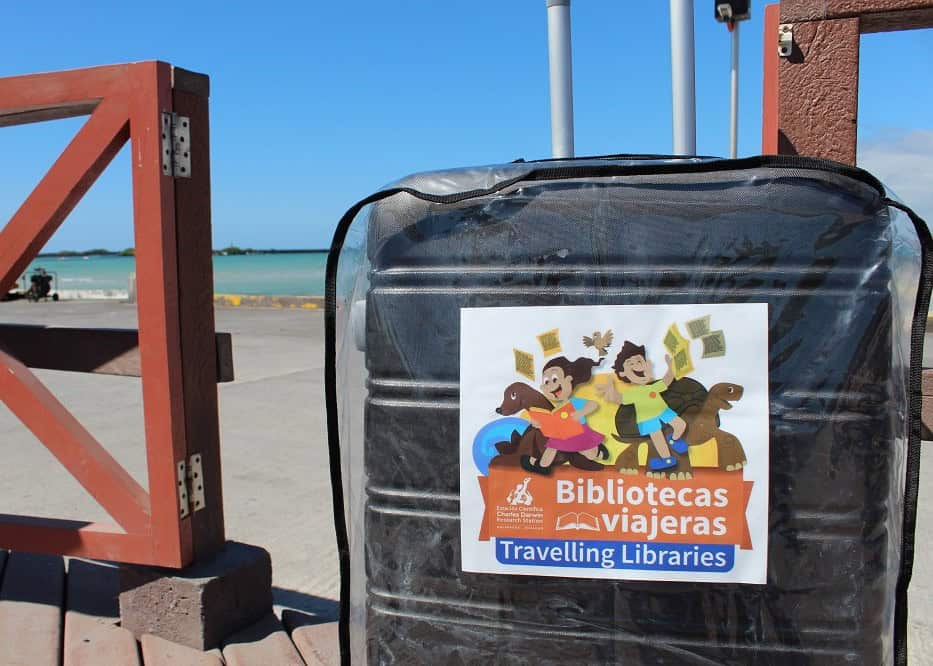
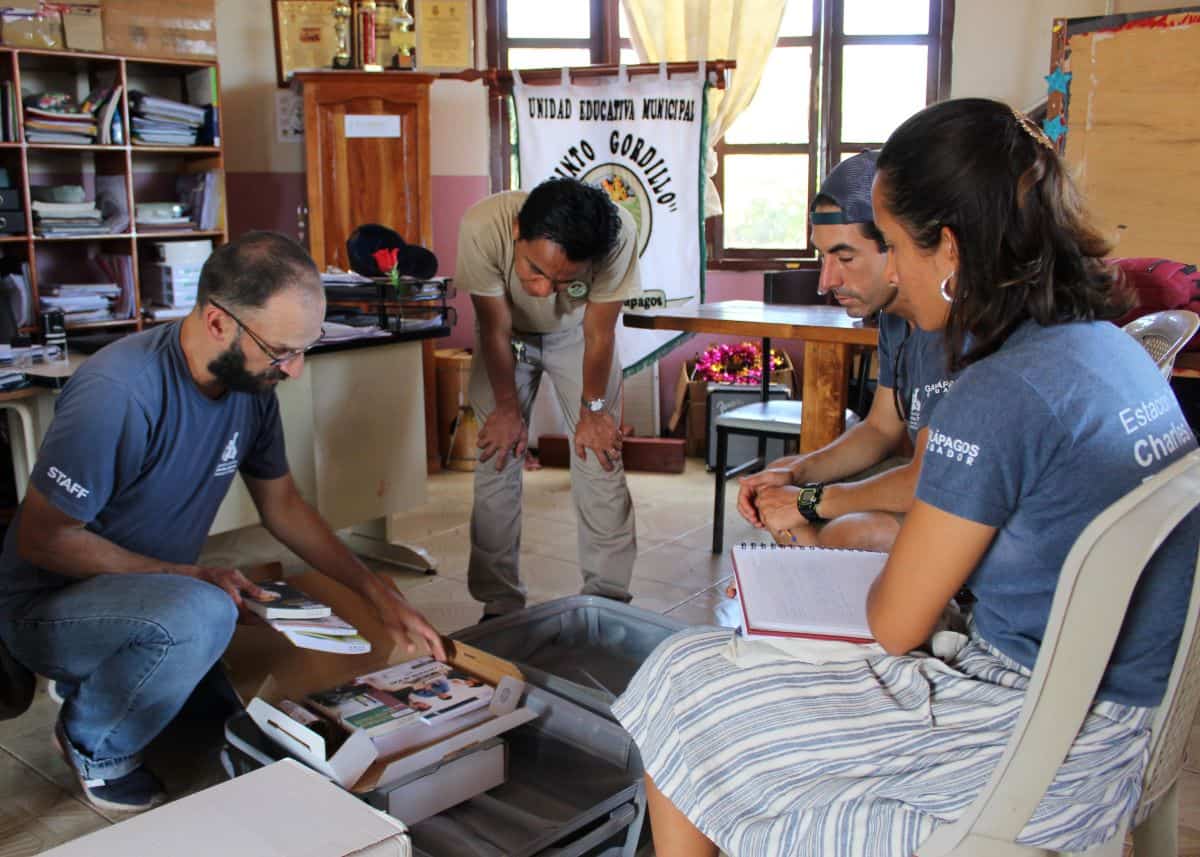
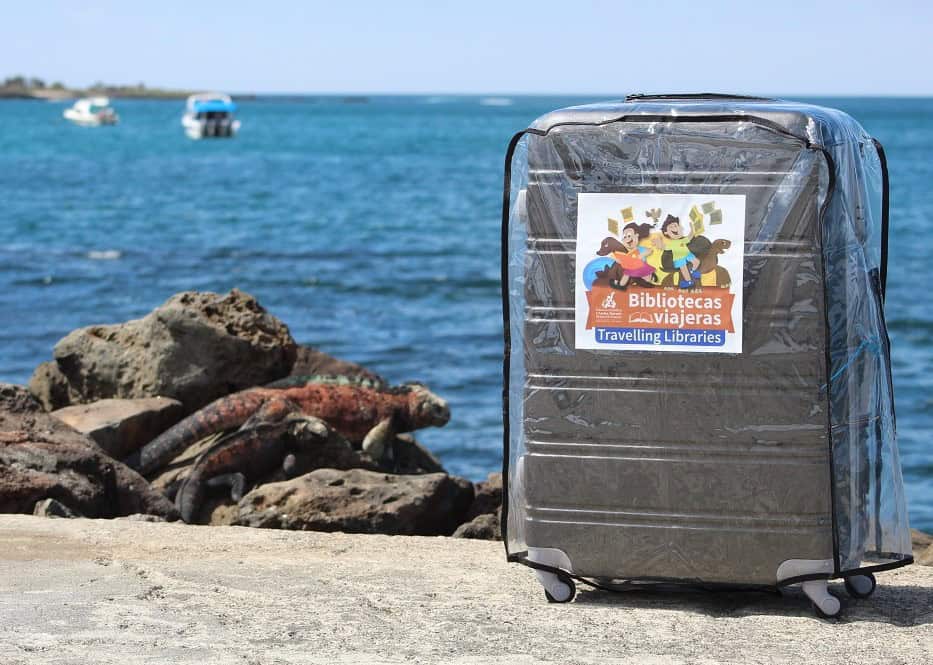
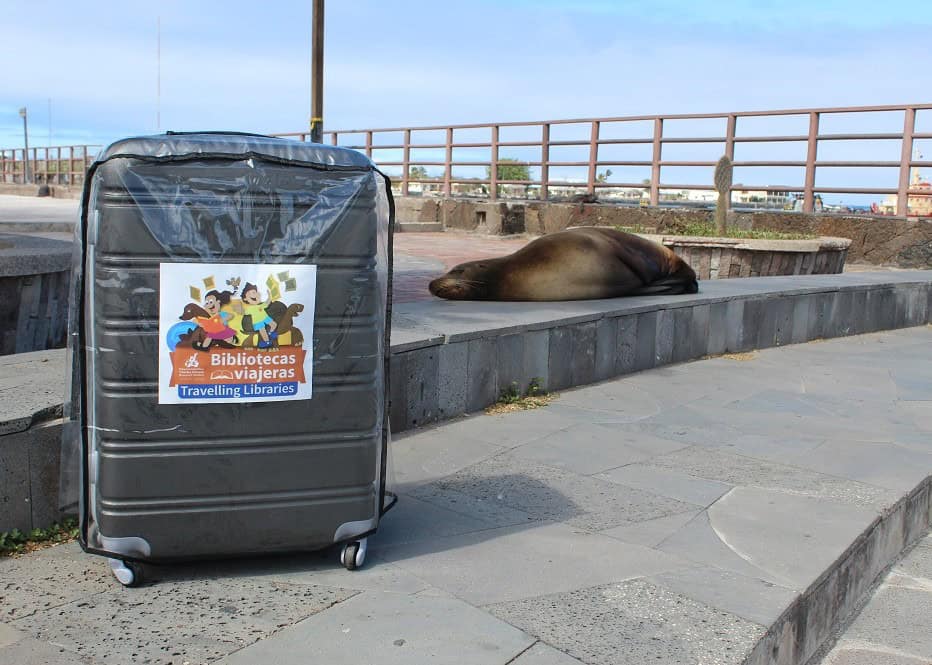
These findings inspired the creation of a mobile programme called ‘Travelling Libraries’. Since mid-2019, books and other materials (paper and digital) are curated, packed into suitcases and sent to primary schools across the islands. Each collection includes up-to-date scientific papers, guides, textbooks, and digital documents, as well as Latin American literature, multimedia, and schoolbooks. The resources focus on conservation, sustainability, biodiversity, and environmentalism as well as general educational materials. The Travelling Libraries stay in each location for about 4-6 months.
In addition to these mobile collections, CDF Library staff support primary school teachers and students via email and social media. Activities are tailored to the suitcase resources, and are designed to strengthen reading and writing skills, environmental awareness, research skills and information literacy.
This innovative solution has been well received by the programme beneficiaries. In Floreana Island, the Travelling Library serves the island’s only local school, which has 3 teachers and 20 students. It is the first library on the island, supporting school curricula with every following suitcase. On Isabela Island, teachers at the local primary school in Puerto Villamil, say the Travelling Library’s materials are a great complement to their basic book collection, helping its 400 students and 25 teachers learn about environmental topics.
The Travelling Library project is ongoing, and it is planned that in future phases other population groups will be targeted to include high school students, families of the primary school students, tourist guides and National Park rangers. Eventually, the travelling collections will become seeds for future permanent library collections in each island, leading to (re)creation of local, public libraries.
Con una vida silvestre y unos ecosistemas únicos, las Islas Galápagos (Ecuador) son un Parque Nacional, una Reserva de la Biosfera de la UNESCO, y un Patrimonio Natural de la Humanidad. Las Galápagos inspiraron la teoría de la evolución de Darwin, y siguen siendo un laboratorio viviente para los investigadores y científicos de hoy. El archipiélago está sujeto a medidas que buscan proteger las especies en peligro de extinción y los diferentes nichos ecológicos, así como aumentar la conciencia sobre la sostenibilidad y el cuidado del medio ambiente tanto entre la población local como entre los visitantes.
De las 13 islas principales del archipiélago, solo 4 pueden ser habitadas. Fuertemente protegidas desde 1969, la población total de estas 4 islas es de aproximadamente 33.000 personas, lo cual incluye un buen número de migrantes indígenas Otavalo y Salasaca, procedentes del Ecuador continental.
Entre la población existen fuertes diferencias socioeconómicas, culturales y étnicas, así como niveles de educación variados. En general, las destrezas de lectura, escritura e información son deficientes. En términos de infraestructura, la comunicación con el continente es limitada, la conexión a Internet es débil y el uso de nuevas tecnologías se centra en la televisión y el entretenimiento que los teléfonos inteligentes pueden ofrecer. No existen librerías ni bibliotecas públicas.
La Fundación Charles Darwin (FCD), una ONG que trabaja en Galápagos, se dedica a apoyar la conservación de la biodiversidad única de las islas. La Estación Científica Charles Darwin alberga la Biblioteca y Archivo de la FCD, la unidad más grande y antigua y mejor estructurada de Galápagos. La biblioteca, esencial para el trabajo científico de la Estación, mantiene una completa colección de literatura académica sobre las islas, así como archivos audiovisuales y textuales relativos a la historia de la ciencia en el archipiélago.
En 2018, el recién nombrado coordinador de la Biblioteca y Archivo de la FCD realizó una evaluación de la situación. Encontró bibliotecas escolares insuficientes, acceso inadecuado a Internet, y escasez de libros y actividades culturales. Con prácticas de lectura limitadas, especialmente entre los jóvenes, existía una necesidad urgente de proveer conocimiento a una población que habita una de las áreas de mayor importancia científica y biológica del planeta.
Estos detonadores inspiraron la creación de un programa itinerante llamado “Bibliotecas Viajeras”. Desde mediados de 2019, los libros y otros materiales (en papel y digitales) se seleccionan, se meten en maletas y se envían a las escuelas primarias de las islas. Cada colección incluye artículos científicos, guías, libros de texto y documentos digitales actualizados, así como literatura, multimedia y otros textos latinoamericanos. Los recursos se enfocan sobre todo en conservación, sustentabilidad, biodiversidad y ambientalismo, aunque también se incluyen materiales educativos en general. Las “Bibliotecas Viajeras” permanecen en cada ubicación durante aproximadamente 4-6 meses.
Además de estas colecciones móviles, el personal de la biblioteca de la FCD apoya a los maestros y estudiantes de educación primaria mediante correo electrónico y redes. Las actividades se adaptan a los recursos de la maleta y están diseñadas para fortalecer las habilidades de lectura y escritura, la conciencia ambiental, las destrezas de investigación y la alfabetización informacional.
Esta innovadora solución ha sido bien recibida por los beneficiarios del programa. En la isla Floreana, la “Biblioteca Viajera” se ubica en la única escuela de la isla, que tiene 3 profesores y 20 estudiantes. Es la primera biblioteca que llega a ese territorio, y respalda los planes de estudios escolares. En la isla Isabela, los maestros de la escuela primaria local en Puerto Villamil señalan que los materiales de la “Biblioteca Viajera” son un gran complemento a su colección de libros básicos, ya que ayudan a sus 400 estudiantes y 25 maestros a ampliar sus conocimientos sobre temas ambientales.
El proyecto de la “Biblioteca Viajera” está en curso y se prevé que en fases futuras se apunte a otros grupos de población, incluyendo así a estudiantes de secundaria, familias de estudiantes de primaria, guías turísticos y guardaparques del Parque Nacional. Eventualmente, las colecciones itinerantes se convertirán en semillas para futuras colecciones de bibliotecas permanentes en cada isla, lo que conducirá a la (re)creación de bibliotecas públicas locales.