About Netherlands (Kingdom of the)

Region: Europe
Area: 41,540 km²
Population: 17,993,485
Libraries (Service Points): 1,144
Libraries in Netherlands (Kingdom of the)
Despite the country’s small size, the Netherlands has a number of organisations, not-for-profit-foundations, and for-profit enterprises involved in maintaining library infrastructure and keeping services up-to-date.
The KB, National Library of the Netherlands, offers a platform for people and information to come together. Their most important task for the coming years, is a national digital library which is being developed collaboratively by the National Library and its network partners.
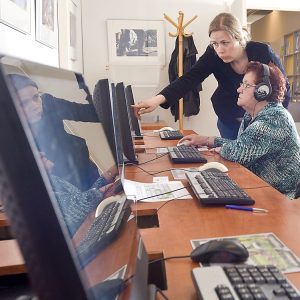
Dutch public libraries offer access to information, knowledge, language, and culture to everyone in inviting physical and virtual meeting spaces. There are also a variety of special, government, medical, industrial and corporate libraries to support a range of sectors.
The Ministry of Education, Culture and Science is responsible for the development of policy and legislation concerning libraries. Grants are the largest source of income for libraries with the majority of funding from municipalities. In principle, the state does not finance public libraries, and therefore makes little contribution to libraries’ income, except for incidental and partnership projects.
With the Library at School (de Bibliotheek op school) programme, libraries and municipalities join forces to draw attention to reading for pleasure and increased media literacy both at school and at home. This collaboration encourages children and young people to read more, and to use the internet, social media and games in wise and informed ways. School libraries are available in primary education, and also in secondary education. In primary education, the library’s emphasis is on promoting reading. In secondary education, research becomes an important focus, with an emphasis on learning path support for projects and theses.
Netherland’s academic libraries see knowledge and information skills of lecturers, researchers and students as critically important in maintaining the quality of Universities and a knowledgeable Dutch society. The libraries’ expertise and traditional services are becoming increasingly relevant through the development of open and online education – for example, advice on copyrights and licenses, the access and storage of content and the promotion of information skills.
Higher education institutions receive a fixed amount from the government with an additional variable amount, based on the following:
- The number of enrolments in recognized bachelor’s and master’s programs within the nominal study duration.
- The number of completed bachelors and masters for which a diploma has been awarded.
Strategic development of libraries in higher education , through the partnership network Samenwerkingsverband Hogeschoolbibliotheken, is focused on the following goals: Intensifying the collaborations between libraries; the library as a learning and working environment; the role of the library in education support; and sustainable access to information.
SDG stories


Library data (Totals)
|
Library type |
Total |
National |
Academic |
Public |
Community |
School |
Other |
|---|---|---|---|---|---|---|---|
|
Libraries (Service Points)
Library service point is a fixed or mobile facility through which library provides a service to its users. Central libraries, branch libraries, mobile libraries, and external service points located in different geographical locations and managed by one administrative unit are all each individual service points. Number of libraries is the total number of central/main libraries, branch libraries, external service points and mobile libraries. 1,144 |
1,144 2024 |
1 2021 |
49 2022 |
1,094 2024 |
— |
— |
— |
|
Main Libraries
Central/main library is usually part or those parts of an administrative unit where the main administrative functions and the important parts of the library collection and services are located. An administrative unit comprising several branch libraries does not necessarily include a central library. 62 |
62 2022 |
— |
49 2022 |
13 2019 |
— |
— |
— |
|
Branch Libraries
Branch library is a part of a larger administrative unit providing, in separate quarters, a service for a particular user group (e.g. children, faculties) or for a locally defined clientele. Institute, departmental and other affiliated libraries are included. Mobile libraries and external service points are excluded. — |
— |
— |
— |
— |
— |
— |
— |
|
External Service Points
External service point is a point away from library premises at which a certain service is regularly offered to users. This includes places within a locality at which library material is deposited for informal circulation to a restricted group of users but without other library services, for example, old people’s homes, community centres, collections for hospital patients. Mobile libraries and their stops are not counted as external service points. — |
— |
— |
— |
— |
— |
— |
— |
|
Mobile Libraries
Mobile library is a library, sometimes a division of a public library, using transport means to provide documents and services directly to users as an alternative to access on library premises. — |
— |
— |
— |
— |
— |
— |
— |
|
Libraries (Administrative Units)
Administrative unit is any independent library, or group of libraries, under a single directorate or a single administration. The term “independent” does not imply legal or financial independence but only that the library is a recognisably separate unit, typically within a larger organisation. The administrative unit can be a single library or a larger organisation, typically containing a central/main library, branch libraries and administrative functions. 49 |
49 2022 |
— |
49 2022 |
— |
— |
— |
— |
|
Libraries with Internet Access
Libraries (Service Points) that provides internet access from at least one workstation available to the public regardless of whether access is free, and/or provides a wireless network allowing users to connect to the Internet. 50 |
50 2022 |
1 2021 |
49 2022 |
— |
— |
— |
— |
|
Full-Time Staff
Full-time equivalent (FTE) staff are all library employees who work for the library in return for payment. It includes professional staff, qualified staff, project staff and assistants. Other staff (library employees who work in security and on domestic duties, for example, cleaners, porters, caretakers and catering staff) and volunteers are excluded. 7,002 |
7,002 2024 |
410 2021 |
1,234 2022 |
5,358 2024 |
— |
— |
— |
|
Volunteers
Volunteer is a person working on library tasks without payment. In counting volunteers, the concept of headcount is used. 27,825 |
27,825 2024 |
— |
— |
27,825 2024 |
— |
— |
— |
|
Registered Users
Registered user is a person or organisation registered with a library in order to use its collection and/or services within or away from the library. Users may be registered upon their request or automatically when enrolling in the institutions. 4.6 M |
4,616,810 2024 |
17,069 2020 |
884,826 2022 |
3,714,915 2024 |
— |
— |
— |
|
Physical Visits
Physical visit is a person (individual) entering the library premises. 59 M |
59,039,807 2024 |
12,966 2021 |
— |
59,026,841 2024 |
— |
— |
— |
|
Physical Loans
Physical loan is a direct lending or delivery transaction of an item in physical form. Physical loans include loans of items in non-electronic form (e.g. books) and loans electronic documents on a physical carrier (e.g. CD-ROM). 52.4 M |
52,353,628 2024 |
28,218 2021 |
848,168 2022 |
51,477,242 2024 |
— |
— |
— |
|
eBook Loans
eBook is a non-serial digital document, licenced or not, where searchable text is prevalent, and similar to a print book (monograph). eBooks can be lent to users either on portable devices (eBook readers) or by transmitting the contents to the user’s PC or other device for a limited time period. 9.3 M |
9,269,333 2024 |
3,500,000 2018 |
— |
5,769,333 2024 |
— |
— |
— |
|
Audio Book Loans
Audio book (or talking book) is a sound recording of readings of a book, magazine, or newspaper, usually designed for use by visually impaired people. Audio books can be lent to users either on a physical carrier or other device, or by transmitting the content to the user’s PC or other device for a limited time period. 2.6 M |
2,609,863 2024 |
— |
— |
2,609,863 2024 |
— |
— |
— |
|
Downloads
Download is a content unit that is successfully requested from a library-provided online service or other internet service (e.g. database, electronic serial or digital document). 58.5 M |
58,497,020 2022 |
197,846 2018 |
58,299,174 2022 |
— |
— |
— |
— |
Library data (Per 1M People)
|
Library type |
Total |
National |
Academic |
Public |
Community |
School |
Other |
|---|---|---|---|---|---|---|---|
|
Libraries (Service Points)
1,144
Library service point is a fixed or mobile facility through which library provides a service to its users. Central libraries, branch libraries, mobile libraries, and external service points located in different geographical locations and managed by one administrative unit are all each individual service points. Number of libraries is the total number of central/main libraries, branch libraries, external service points and mobile libraries. |
63.6 2024 |
0.1 2021 |
2.7 2022 |
60.8 2024 |
— |
— |
— |
|
Main Libraries
62
Central/main library is usually part or those parts of an administrative unit where the main administrative functions and the important parts of the library collection and services are located. An administrative unit comprising several branch libraries does not necessarily include a central library. |
3.4 2022 |
— |
2.7 2022 |
0.7 2019 |
— |
— |
— |
|
Branch Libraries
—
Branch library is a part of a larger administrative unit providing, in separate quarters, a service for a particular user group (e.g. children, faculties) or for a locally defined clientele. Institute, departmental and other affiliated libraries are included. Mobile libraries and external service points are excluded. |
— |
— |
— |
— |
— |
— |
— |
|
External Service Points
—
External service point is a point away from library premises at which a certain service is regularly offered to users. This includes places within a locality at which library material is deposited for informal circulation to a restricted group of users but without other library services, for example, old people’s homes, community centres, collections for hospital patients. Mobile libraries and their stops are not counted as external service points. |
— |
— |
— |
— |
— |
— |
— |
|
Mobile Libraries
—
Mobile library is a library, sometimes a division of a public library, using transport means to provide documents and services directly to users as an alternative to access on library premises. |
— |
— |
— |
— |
— |
— |
— |
|
Libraries (Administrative Units)
49
Administrative unit is any independent library, or group of libraries, under a single directorate or a single administration. The term “independent” does not imply legal or financial independence but only that the library is a recognisably separate unit, typically within a larger organisation. The administrative unit can be a single library or a larger organisation, typically containing a central/main library, branch libraries and administrative functions. |
2.7 2022 |
— |
2.7 2022 |
— |
— |
— |
— |
|
Libraries with Internet Access
50
Libraries (Service Points) that provides internet access from at least one workstation available to the public regardless of whether access is free, and/or provides a wireless network allowing users to connect to the Internet. |
2.8 2022 |
0.1 2021 |
2.7 2022 |
— |
— |
— |
— |
|
Full-Time Staff
7,002
Full-time equivalent (FTE) staff are all library employees who work for the library in return for payment. It includes professional staff, qualified staff, project staff and assistants. Other staff (library employees who work in security and on domestic duties, for example, cleaners, porters, caretakers and catering staff) and volunteers are excluded. |
389.1 2024 |
22.8 2021 |
68.6 2022 |
297.8 2024 |
— |
— |
— |
|
Volunteers
27,825
Volunteer is a person working on library tasks without payment. In counting volunteers, the concept of headcount is used. |
1,546.4 2024 |
— |
— |
1,546.4 2024 |
— |
— |
— |
|
Registered Users
4.6 M
Registered user is a person or organisation registered with a library in order to use its collection and/or services within or away from the library. Users may be registered upon their request or automatically when enrolling in the institutions. |
256,582.3 2024 |
948.6 2020 |
49,174.8 2022 |
206,458.9 2024 |
— |
— |
— |
|
Physical Visits
59 M
Physical visit is a person (individual) entering the library premises. |
3.3 M 2024 |
720.6 2021 |
— |
3.3 M 2024 |
— |
— |
— |
|
Physical Loans
52.4 M
Physical loan is a direct lending or delivery transaction of an item in physical form. Physical loans include loans of items in non-electronic form (e.g. books) and loans electronic documents on a physical carrier (e.g. CD-ROM). |
2.9 M 2024 |
1,568.2 2021 |
47,137.5 2022 |
2.9 M 2024 |
— |
— |
— |
|
eBook Loans
9.3 M
eBook is a non-serial digital document, licenced or not, where searchable text is prevalent, and similar to a print book (monograph). eBooks can be lent to users either on portable devices (eBook readers) or by transmitting the contents to the user’s PC or other device for a limited time period. |
515,149.4 2024 |
194,514.8 2018 |
— |
320,634.6 2024 |
— |
— |
— |
|
Audio Book Loans
2.6 M
Audio book (or talking book) is a sound recording of readings of a book, magazine, or newspaper, usually designed for use by visually impaired people. Audio books can be lent to users either on a physical carrier or other device, or by transmitting the content to the user’s PC or other device for a limited time period. |
145,044.9 2024 |
— |
— |
145,044.9 2024 |
— |
— |
— |
|
Downloads
58.5 M
Download is a content unit that is successfully requested from a library-provided online service or other internet service (e.g. database, electronic serial or digital document). |
3.3 M 2022 |
10,995.4 2018 |
3.2 M 2022 |
— |
— |
— |
— |
Contextual data
|
Population |
Netherlands (Kingdom of the) |
Region |
World |
|---|---|---|---|
|
Population Total population is based on the de facto definition of population, which counts all residents regardless of legal status or citizenship. The values shown are midyear estimates. |
17,993,485 2024 |
928,263,208 2024 |
8,141,808,945 2024 |
|
Proportion of Population Younger than 15 Age dependency ratio, young, is the ratio of younger dependents--people younger than 15--to the working-age population--those ages 15-64. Data are shown as the proportion of dependents per 100 working-age population. |
23.3% 2024 |
27.0% 2024 |
38.0% 2024 |
|
Proportion of Population Older than 64 Age dependency ratio, old, is the ratio of older dependents--people older than 64--to the working-age population--those ages 15-64. Data are shown as the proportion of dependents per 100 working-age population. |
31.8% 2024 |
28.1% 2024 |
15.7% 2024 |
|
Population Growth Annual population growth rate for year t is the exponential rate of growth of midyear population from year t-1 to t, expressed as a percentage. Population is based on the de facto definition of population, which counts all residents regardless of legal status or citizenship. |
0.6% 2024 |
0 2024 |
1.0% 2024 |
|
Population Density Population density is midyear population divided by land area in square kilometers. Population is based on the de facto definition of population, which counts all residents regardless of legal status or citizenship--except for refugees not permanently settled in the country of asylum, who are generally considered part of the population of their country of origin. Land area is a country's total area, excluding area under inland water bodies, national claims to continental shelf, and exclusive economic zones. In most cases the definition of inland water bodies includes major rivers and lakes. |
531.0% 2023 |
33.7% 2022 |
61.6% 2022 |
|
Urban Population Urban population refers to people living in urban areas as defined by national statistical offices. The data are collected and smoothed by United Nations Population Division. |
95.6% 2024 |
74.0% 2024 |
57.6% 2024 |
|
Information Infrastructure |
Netherlands (Kingdom of the) |
Region |
World |
|---|---|---|---|
|
Internet Users Internet users are individuals who have used the Internet (from any location) in the last 3 months. The Internet can be used via a computer, mobile phone, personal digital assistant, games machine, digital TV etc. |
97.0% 2023 |
90.9% 2024 |
71.2% 2024 |
|
Female Internet Users This indicator refers to female individuals who have used the Internet (from any location) in the last 3 months. The Internet can be used via a computer, mobile phone, personal digital assistant, games machine, digital TV etc. |
95.9% 2023 |
90.0% 2024 |
68.2% 2024 |
|
Male Internet Users This indicator refers to male individuals who have used the Internet (from any location) in the last 3 months. The Internet can be used via a computer, mobile phone, personal digital assistant, games machine, digital TV etc. |
- |
90.0% |
- |
|
Access to Electricity Access to electricity is the percentage of population with access to electricity. Electrification data are collected from industry, national surveys and international sources. |
100.0% 2023 |
100.0% 2023 |
91.6% 2023 |
|
Economy, Poverty, and Employment |
Netherlands (Kingdom of the) |
Region |
World |
|---|---|---|---|
|
GDP per Capita This indicator provides values for gross domestic product (GDP) expressed in current international dollars, converted by purchasing power parities (PPPs). PPPs account for the different price levels across countries and thus PPP-based comparisons of economic output are more appropriate for comparing the output of economies and the average material well-being of their inhabitants than exchange-rate based comparisons. Gross domestic product is the total income earned through the production of goods and services in an economic territory during an accounting period. It can be measured in three different ways: using either the expenditure approach, the income approach, or the production approach. This series has been linked to produce a consistent time series to counteract breaks in series over time due to changes in base years, source data and methodologies. Thus, it may not be comparable with other national accounts series in the database for historical years. The core indicator has been divided by the general population to achieve a per capita estimate. This indicator is expressed in current prices, meaning no adjustment has been made to account for price changes over time. The PPP conversion factor is a currency conversion factor and a spatial price deflator. PPPs convert different currencies to a common currency and, in the process of conversion, equalize their purchasing power by eliminating the differences in price levels between countries, thereby allowing volume or output comparisons of GDP and its expenditure components. |
84,222 2024 |
51,720.6 2024 |
24,405 2024 |
|
Poverty Rate Poverty headcount ratio at $3.00 a day is the percentage of the population living on less than $3.00 a day at 2021 purchasing power adjusted prices. As a result of revisions in PPP exchange rates, poverty rates for individual countries cannot be compared with poverty rates reported in earlier editions. |
0.1% 2021 |
0.5% 2024 |
10.3% 2024 |
|
Inequality Gini index measures the extent to which the distribution of income (or, in some cases, consumption expenditure) among individuals or households within an economy deviates from a perfectly equal distribution. A Lorenz curve plots the cumulative percentages of total income received against the cumulative number of recipients, starting with the poorest individual or household. The Gini index measures the area between the Lorenz curve and a hypothetical line of absolute equality, expressed as a percentage of the maximum area under the line. Thus a Gini index of 0 represents perfect equality, while an index of 100 implies perfect inequality. |
25.7% 2021 |
0.0% |
- |
|
Unemployment Unemployment refers to the share of the labor force that is without work but available for and seeking employment. Definitions of labor force and unemployment differ by country. |
3.6% 2024 |
5.3% 2024 |
6.2% 2021 |
|
Inactive Youth The share of youth not in education, employment or training (also known as “the NEET rate”) conveys the number of young persons not in education, employment or training as a percentage of the total youth population. Youth not in education are those who were neither enrolled in school nor in a formal training program (e.g. vocational training). For the purposes of this indicator, youth is defined as all persons between the ages of 15 and 24 (inclusive). percentage of youth population |
3.6% 2024 |
11.7% 2024 |
- |
|
Education and Literacy |
Netherlands (Kingdom of the) |
Region |
World |
|---|---|---|---|
|
Education Spending General government expenditure on education (current, capital, and transfers) is expressed as a percentage of GDP. It includes expenditure funded by transfers from international sources to government. General government usually refers to local, regional and central governments. percentage of GDP |
5.2% 2022 |
4.6% 2022 |
3.5% 2023 |
|
Adult Literacy Rate Adult literacy rate is the percentage of people ages 15 and above who can both read and write with understanding a short simple statement about their everyday life. percentage of people ages 15 and above |
- |
4.6% 2022 |
87.7% 2024 |
|
Female Adult Literacy Adult literacy rate is the percentage of people ages 15 and above who can both read and write with understanding a short simple statement about their everyday life. percentage of females ages 15 and above |
- |
98.5% 2024 |
84.6% 2024 |
|
Male Adult Literacy Adult literacy rate is the percentage of people ages 15 and above who can both read and write with understanding a short simple statement about their everyday life. percentage of males ages 15 and above |
- |
99.1% 2023 |
90.9% 2024 |
|
Female Youth Literacy Youth literacy rate is the percentage of people ages 15-24 who can both read and write with understanding a short simple statement about their everyday life. percentage of females ages 15-24 |
- |
99.8% 2023 |
92.0% 2024 |
|
Male Youth Literacy Youth literacy rate is the percentage of people ages 15-24 who can both read and write with understanding a short simple statement about their everyday life. percentage of males ages 15-24 |
- |
99.8% 2023 |
94.1% 2024 |
|
Research and Innovation |
Netherlands (Kingdom of the) |
Region |
World |
|---|---|---|---|
|
Research Spending Gross domestic expenditures on research and development (R&D), expressed as a percent of GDP. They include both capital and current expenditures in the four main sectors: Business enterprise, Government, Higher education and Private non-profit. R&D covers basic research, applied research, and experimental development. percentage of GDP |
2.3% 2022 |
2.0% 2022 |
2.7% 2022 |
|
Researchers The number of researchers engaged in Research &Development (R&D), expressed as per million. Researchers are professionals who conduct research and improve or develop concepts, theories, models techniques instrumentation, software of operational methods. R&D covers basic research, applied research, and experimental development. per million people |
6,319 2022 |
3,466.1 2022 |
1,516 2018 |
|
Scientific Articles Article counts refer to publications from a selection of conference proceedings and peer-reviewed journals from Scopus in science and engineering fields, according to the National Center for Science and Engineering Statistics Taxonomy of Disciplines. fractional count |
34,311 2022 |
913,901.4 2022 |
3,338,192 2022 |
National Library Associations
The Netherlands Public Library Association / Vereniging Openbare Bibliotheken, VOB
VOB consists of more than 160 members, a board, and a bureau. Together they work on the common interests of public libraries, the provincial support organizations (POIs) and the national organizations. The VOB unites the public libraries industry. The VOB is a branch association that acts responsibly, flexibly and demand driven as a stakeholder, contracting party, service provider, meeting place and employers’ organisation. Strengthening the social role of members is central so that everyone in society has access to good information and opportunities to develop themselves, at every level.
FOBID Netherlands Library Forum
FOBID was founded in 1974 to improve the co-operation between different types of libraries and institutions for information and documentation services. It is the branch organization for the Dutch library sector. It serves as a platform that represents the interests of the sector and acts as a point of contact for affiliated organizations in the Netherlands and sister organizations abroad.
Its aim is to defend the interests of these institutions and their professionals, and to enhance professional development. The main activities focus on advocacy of the library field’s legal interests, on international networking and co-operation of professionals in the field of bibliographic matters and education.
The Royal Dutch Association of Information Professionals / Koninklijke Nederlandse Vereniging van Informatieprofessionals, KNVI
The KNVI is a Dutch professional association for professionals in information provision and management. KNVI is the platform for Professionals in Information Management, Information Technology and Information Services, where every professional in these disciplines feels at home. Information plays a leading role in the development of people and society. KNVI therefore sees it as their task to promote the development of information professionals, by working together, facilitating, meeting, focusing, and leading the way. In doing so, KNVI considers their core values of independence, integrity, and professionalism.
National Library
National Library of the Netherlands, KB / Koninklijke Bibliotheek, KB
For centuries, the KB, National Library of the Netherlands has been a source of inspiration and innovation. Since its foundation in 1798, the KB has developed into a broad-based, versatile organisation, which guarantees the visibility, usability and sustainability of the national library collection for all Dutch people, for any purpose, both now and in the future. The KB is responsible for the written word, particularly Dutch publications, and for ensuring that everyone is able to read, learn and conduct research. This is the way of contributing towards making the Netherlands smarter, more competent and more creative.
Policy Making Institutions
The Ministry of Education, Culture and Science / Ministerie van Onderwijs, Cultuur en Wetenschappen (OCW)
The Ministry has the following objectives:
- To ensure that everyone gets a good education
- To ensure that everyone is prepared for personal independance and responsibility
- To ensure that everyone has the opportunity to experience and enjoy culture
- To ensure that teachers, artists, and scientists are able to carry out their work
Library Support Organisations
The Dutch consortium of university libraries and the National Library of The Netherlands / Samenwerkingsverband van Nederlandse universiteitsbibliotheken en de Koninklijke Bibliotheek, UKB
The partnership of university libraries and the National Library supports and accelerates scientific progress by distributing, concentrating, and connecting mutual expertise in national and international networks. It consists of thirteen university libraries and the National Library. The main collaboration takes place in the field of developing a shared vision of the library as a learning and working environment; the development of expertise in the field of educational support; securing sustainable access to information; facilitating open science; and where possible systems and infrastructure are shared.
WSWB Libraries
The WSWB Libraries (Werkgroep speciale wetenschappelijke bibliotheken / Special scientific libraries working group) represents the interests of special scientific libraries. The foundation supports the 31 participating libraries in the management of their collections, which are of (great) importance for the promotion of both the sciences and the arts and culture in the Netherlands. The foundation does this by, among other things, concluding (license) contracts, granting access to the collections of the libraries participating in the WSWB to third parties, by making the (often unique) collections of the WSWB libraries visible within (international) networks and through the exchange of knowledge in areas specific to the specialized scientific libraries.
National Policy for Libraries
There is no information available.
Library Law
Public Library Facilities Act / Wet stelsel openbare bibliotheekvoorzieningen (Wsob)
In 2015, a new law for the public library sector (Wsob) came into force. This law describes a.o. the core functions of libraries and the roles of parties involved. It also states that the highly decentralized library sector constitutes a network for which the national government, provincial governments and municipalities are jointly responsible. Municipalities and Provinces (represented by, respectively, VNG (Vereniging Nederlandse Gemeente) and IPO (Interprovinciaal Overleg) are responsible for the physical domain. The national government (Ministry for Education, Culture and Science – OCW) is responsible for the digital domain as well as the effectiveness and coherence of the library system as a whole. The execution of the OCW tasks is carried out by the National Library (KB).
According to the new law public libraries should give the general public access to information and culture, guided by principles such as independence, credibility, accessibility, pluralism and authenticity. Their concrete tasks are making available knowledge and information, facilitating learning, promoting reading and a taste of literature, promoting arts and culture, and organising social encounters and debate.
The new law also defines the scope of the digital library and arranges its funding.
Legal Deposit Law
There is no information available.
Copyright Law & Library Exceptions and Limitations
The Dutch Copyright Act / Auteurswet
Exceptions and limitations for libraries
Libraries, alongside educational establishments and museums open to the public, as well as cinematographic or audio-visual heritage archives and establishments which do not operate for a commercial purpose benefit from copyright exceptions for preservation and restoration. This provision is technology-neutral, allowing libraries to digitize its work if necessary, for preservation, and includes permission for copying to avoid format obsolescence. A library may also make works belonging to its own collection available digitally on site to the public, ie only within the walls of its building.
There are exceptions for copying for private study and for education, although with the possibility for remuneration. The Netherlands has also implemented the Marrakesh Treaty, although again with the possibility of remuneration.
Libraries can draw on an orphan works provision to copy and make available works in their collections where rightholders have not been identified and found after a careful examination (there is a long list of conditions), and if uses are then only for public interest goals. When making orphan works available, libraries and others may only generate income that serves to cover the costs of digitization and availability.
While the European Union Copyright Directive has yet to be implemented, there are already provisions allowing for the copying of works which are out-of-commerce, against remuneration.
The Netherlands does have a Public Lending Right scheme, although this does not apply to educational or research libraries, or to primarily publicly subsidised ones such as in parts of the Dutch Antilles. The Public Lending Rights Office (Stichting Leenrecht) collects payments from libraries, toy libraries, CD lenders and art leasing galleries and distributes these payments to organizations representing copyright owners.
Elsewhere, there are exceptions for quotation, parody and satire, incidental uses, and transitory copying (i.e. to allow for caching).
Professional Qualification Requirements
There is no information available.
Education
Education
The full-time courses have been discontinued or merged with other courses in ICT, business administration and management into “broad” bachelors and masters. At present, there are only hands-on training and retraining activities available for the entire information field, ranging from a 1-day workshop to a course of several months at all levels. Some courses are also taught in English and Spanish.
Professional Publications
IP magazine for information professionals / IP vakblad voor informatieprofessionals
IP is the independent online platform and printed magazine for information specialist of today and tomorrow. The main audience are professionals working in the information, library, archive and heritage world.
Government documentation / Overheidsdocumentatie
The printed magazine provides insight into all current developments in the field of documentary information provision, information management, management and organization and document management and the digital transition in which this field is located. It focuses on everyone who is concerned with keeping (government) information permanently accessible. It is published eight times a year.
Library magazine: trade magazine for the public library / Bibliotheekblad: vakblad voor de openbare bibliotheek
If you want to stay informed of developments in public library work, subscribe to Bibliotheekblad. This printed professional magazine is full of opinion articles, interviews, reports, news, and background information. The magazine is published nine times a year. Each issue contains a file, which delves deeper into an interesting theme. The magazine focuses primarily on professionals in public libraries. It is also interesting for library boards, governments, the information sector, the cultural sector, and the book sector.
Professional Events
National Library Congress
This annual event is organised by the National Library of the Netherlands, KB. Each year a theme is chosen around with the knowledge and practices are shared in an effort to further the development of libraries.
Smart Humanity
“Smart Humanity” is a multi-year theme of an annual conference of the Royal Dutch Association of Information Professionals (Koninklijke Nederlandse Vereniging van Informatieprofessionals, KNVI). The KNVI has devoted three years to this theme. After being defined and introduced in January 2018, the concept of Smart Humanity is being further elaborated with various scientists and practitioners. The event is aimed at all information professionals.
Library Location Resources
No information available