Libraries in Russian Federation
There are about 90 thousand libraries in Russia, including more than 37,000 public libraries, 3 national libraries and 253 main regional libraries of various constituents of the Russian Federation. The remaining libraries fall under municipal jurisdiction.
There is an extensive network of scientific, academic and school libraries. Various institutions of power also have their own libraries.
Approximately 79% of Russian libraries are in rural areas and receive funding from municipal authorities. About a third of the country’s population are library patrons.
There is a number of professional associations of libraries and librarians, including regional ones. The country’s largest professional organisations are the Russian Library Association, the National Library Association “Libraries of the Future”, and the Association of Cultural Workers, Artists and Educators for Children’s Reading “Raising Readers”.
According to the strategic development plans for Russian libraries, making cultural assets and products of science-driven growth available to all the citizens of the country is one of the top priorities.
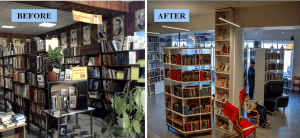
In 2018, the national project “Culture” was started and is being led by the Ministry of Culture of the Russian Federation. Among others, it includes two priority areas, namely the modernization of 660 model municipal libraries in Russian regions and the relaunch of the National Digital Library (NDL).
According to the new approach, the NDL will collect not only electronic copies of all the Russian publications as part of the legal deposit system, but also archival, academic and museum materials. The new approach, which has been thoroughly examined and evaluated by the publishing community, settles accounts with copyright holders based on the number of views by the NDL users.
The NDL will become not only a reliable digital knowledge base, but also the space for cultural and intellectual development of Russian citizens.
One of the upcoming NDL features is an educational app for children that will help to enrich school curriculum with a wide range of cultural content, including books, films, music, and theatre plays.
By 2024, the national project “Culture” is set to re-equip 660 municipal libraries according to the new model standard, update collections etc. Municipal libraries will become welcoming “third places”, intellectual knowledge centers for personal development, including facilities for people with disabilities.
SDG stories

Library data
Contextual data
Population
Population Growth
Proportion of Population Younger than 15
Proportion of Population Older than 64
Population Density
people per sq km
Population Growth
Access to Electricity
Internet Users
Female Internet Users
Male Internet Users
GDP per capita
Poverty Rate
2011 PPP
Inequality
2011 PPP
Unemployment
Inactive Youth
2011 PPP
Education Spending
% of GDP
Adult Literacy Rate
% of people age 15+
Female Adult Literacy
% of GDP
Male Adult Literacy
% of people age 15+
Female Youth Literacy
% of GDP
Male Youth Literacy
% of people age 15+
Research Spending
% of GDP
Researchers
% of GDP
Research Spending
% of GDP
Library data
|
Library type |
Total |
National |
Academic |
Public |
Community |
School |
Other |
|---|---|---|---|---|---|---|---|
|
Libraries (Service Points)
89,680
Library service point is a fixed or mobile facility through which library provides a service to its users. Central libraries, branch libraries, mobile libraries, and external service points located in different geographical locations and managed by one administrative unit are all each individual service points. Number of libraries is the total number of central/main libraries, branch libraries, external service points and mobile libraries. |
89,680 2018 |
3 2018 |
1,321 2018 |
37,138 2018 |
— |
46,234 2018 |
4,984 2018 |
|
Main Libraries
2,239
Central/main library is usually part or those parts of an administrative unit where the main administrative functions and the important parts of the library collection and services are located. An administrative unit comprising several branch libraries does not necessarily include a central library. |
2,239 2018 |
— |
— |
2,239 2018 |
— |
— |
— |
|
Branch Libraries
—
Branch library is a part of a larger administrative unit providing, in separate quarters, a service for a particular user group (e.g. children, faculties) or for a locally defined clientele. Institute, departmental and other affiliated libraries are included. Mobile libraries and external service points are excluded. |
— |
— |
— |
— |
— |
— |
— |
|
External Service Points
45,425
External service point is a point away from library premises at which a certain service is regularly offered to users. This includes places within a locality at which library material is deposited for informal circulation to a restricted group of users but without other library services, for example, old people’s homes, community centres, collections for hospital patients. Mobile libraries and their stops are not counted as external service points. |
45,425 2018 |
— |
— |
45,425 2018 |
— |
— |
— |
|
Mobile Libraries
183
Mobile library is a library, sometimes a division of a public library, using transport means to provide documents and services directly to users as an alternative to access on library premises. |
183 2018 |
— |
— |
183 2018 |
— |
— |
— |
|
Libraries (Administrative Units)
38,462
Administrative unit is any independent library, or group of libraries, under a single directorate or a single administration. The term “independent” does not imply legal or financial independence but only that the library is a recognisably separate unit, typically within a larger organisation. The administrative unit can be a single library or a larger organisation, typically containing a central/main library, branch libraries and administrative functions. |
38,462 2018 |
3 2018 |
1,321 2018 |
37,138 2018 |
— |
— |
— |
|
Libraries with Internet Access
68,843
Libraries (Service Points) that provides internet access from at least one workstation available to the public regardless of whether access is free, and/or provides a wireless network allowing users to connect to the Internet. |
68,843 2018 |
3 2018 |
1,321 2016 |
27,060 2018 |
— |
37,993 2017 |
2,466 2018 |
|
Full-Time Staff
125,140
Full-time equivalent (FTE) staff are all library employees who work for the library in return for payment. It includes professional staff, qualified staff, project staff and assistants. Other staff (library employees who work in security and on domestic duties, for example, cleaners, porters, caretakers and catering staff) and volunteers are excluded. |
125,140 2018 |
2,934 2018 |
— |
122,206 2018 |
— |
— |
— |
|
Volunteers
—
Volunteer is a person working on library tasks without payment. In counting volunteers, the concept of headcount is used. |
— |
— |
— |
— |
— |
— |
— |
|
Registered Users
74.1 M
Registered user is a person or organisation registered with a library in order to use its collection and/or services within or away from the library. Users may be registered upon their request or automatically when enrolling in the institutions. |
74,141,840 2018 |
741,149 2018 |
6,028,472 2018 |
49,958,961 2018 |
— |
14,720,425 2017 |
2,692,833 2018 |
|
Physical Visits
686.8 M
Physical visit is a person (individual) entering the library premises. |
686,845,901 2018 |
1,804,741 2018 |
115,794,154 2018 |
413,439,641 2018 |
— |
129,259,912 2017 |
26,547,453 2018 |
|
Physical Loans
1,027.7 M
Physical loan is a direct lending or delivery transaction of an item in physical form. Physical loans include loans of items in non-electronic form (e.g. books) and loans electronic documents on a physical carrier (e.g. CD-ROM). |
1,027,700,677 2018 |
9,122,221 2018 |
— |
960,665,848 2018 |
— |
— |
57,912,608 2018 |
|
eBook Loans
—
eBook is a non-serial digital document, licenced or not, where searchable text is prevalent, and similar to a print book (monograph). eBooks can be lent to users either on portable devices (eBook readers) or by transmitting the contents to the user’s PC or other device for a limited time period. |
— |
— |
— |
— |
— |
— |
— |
|
Audio Book Loans
—
Audio book (or talking book) is a sound recording of readings of a book, magazine, or newspaper, usually designed for use by visually impaired people. Audio books can be lent to users either on a physical carrier or other device, or by transmitting the content to the user’s PC or other device for a limited time period. |
— |
— |
— |
— |
— |
— |
— |
|
Downloads
28.9 M
Download is a content unit that is successfully requested from a library-provided online service or other internet service (e.g. database, electronic serial or digital document). |
28,908,071 2018 |
10,949,483 2018 |
— |
17,913,418 2018 |
— |
— |
45,170 2018 |
Contextual data
|
Population |
Russian Federation |
Region |
World |
|---|---|---|---|
|
Population Total population is based on the de facto definition of population, which counts all residents regardless of legal status or citizenship. The values shown are midyear estimates. |
143,533,851 2024 |
928,263,208 2024 |
8,141,808,945 2024 |
|
Proportion of Population Younger than 15 Age dependency ratio, young, is the ratio of younger dependents--people younger than 15--to the working-age population--those ages 15-64. Data are shown as the proportion of dependents per 100 working-age population. |
26.4% 2024 |
27.0% 2024 |
38.0% 2024 |
|
Proportion of Population Older than 64 Age dependency ratio, old, is the ratio of older dependents--people older than 64--to the working-age population--those ages 15-64. Data are shown as the proportion of dependents per 100 working-age population. |
26.2% 2024 |
28.1% 2024 |
15.7% 2024 |
|
Population Growth Annual population growth rate for year t is the exponential rate of growth of midyear population from year t-1 to t, expressed as a percentage. Population is based on the de facto definition of population, which counts all residents regardless of legal status or citizenship. |
-0.2% 2024 |
0 2024 |
1.0% 2024 |
|
Population Density Population density is midyear population divided by land area in square kilometers. Population is based on the de facto definition of population, which counts all residents regardless of legal status or citizenship--except for refugees not permanently settled in the country of asylum, who are generally considered part of the population of their country of origin. Land area is a country's total area, excluding area under inland water bodies, national claims to continental shelf, and exclusive economic zones. In most cases the definition of inland water bodies includes major rivers and lakes. |
8.8% 2023 |
33.7% 2022 |
61.6% 2022 |
|
Urban Population Urban population refers to people living in urban areas as defined by national statistical offices. The data are collected and smoothed by United Nations Population Division. |
75.1% 2024 |
74.0% 2024 |
57.6% 2024 |
|
Information Infrastructure |
Russian Federation |
Region |
World |
|---|---|---|---|
|
Internet Users Internet users are individuals who have used the Internet (from any location) in the last 3 months. The Internet can be used via a computer, mobile phone, personal digital assistant, games machine, digital TV etc. |
94.4% 2024 |
90.9% 2024 |
71.2% 2024 |
|
Female Internet Users This indicator refers to female individuals who have used the Internet (from any location) in the last 3 months. The Internet can be used via a computer, mobile phone, personal digital assistant, games machine, digital TV etc. |
92.1% 2023 |
90.0% 2024 |
68.2% 2024 |
|
Male Internet Users This indicator refers to male individuals who have used the Internet (from any location) in the last 3 months. The Internet can be used via a computer, mobile phone, personal digital assistant, games machine, digital TV etc. |
- |
90.0% |
- |
|
Access to Electricity Access to electricity is the percentage of population with access to electricity. Electrification data are collected from industry, national surveys and international sources. |
100.0% 2023 |
100.0% 2023 |
91.6% 2023 |
|
Economy, Poverty, and Employment |
Russian Federation |
Region |
World |
|---|---|---|---|
|
GDP per Capita This indicator provides values for gross domestic product (GDP) expressed in current international dollars, converted by purchasing power parities (PPPs). PPPs account for the different price levels across countries and thus PPP-based comparisons of economic output are more appropriate for comparing the output of economies and the average material well-being of their inhabitants than exchange-rate based comparisons. Gross domestic product is the total income earned through the production of goods and services in an economic territory during an accounting period. It can be measured in three different ways: using either the expenditure approach, the income approach, or the production approach. This series has been linked to produce a consistent time series to counteract breaks in series over time due to changes in base years, source data and methodologies. Thus, it may not be comparable with other national accounts series in the database for historical years. The core indicator has been divided by the general population to achieve a per capita estimate. This indicator is expressed in current prices, meaning no adjustment has been made to account for price changes over time. The PPP conversion factor is a currency conversion factor and a spatial price deflator. PPPs convert different currencies to a common currency and, in the process of conversion, equalize their purchasing power by eliminating the differences in price levels between countries, thereby allowing volume or output comparisons of GDP and its expenditure components. |
47,405 2024 |
51,720.6 2024 |
24,405 2024 |
|
Poverty Rate Poverty headcount ratio at $3.00 a day is the percentage of the population living on less than $3.00 a day at 2021 purchasing power adjusted prices. As a result of revisions in PPP exchange rates, poverty rates for individual countries cannot be compared with poverty rates reported in earlier editions. |
0.1% 2023 |
0.5% 2024 |
10.3% 2024 |
|
Inequality Gini index measures the extent to which the distribution of income (or, in some cases, consumption expenditure) among individuals or households within an economy deviates from a perfectly equal distribution. A Lorenz curve plots the cumulative percentages of total income received against the cumulative number of recipients, starting with the poorest individual or household. The Gini index measures the area between the Lorenz curve and a hypothetical line of absolute equality, expressed as a percentage of the maximum area under the line. Thus a Gini index of 0 represents perfect equality, while an index of 100 implies perfect inequality. |
33.0% 2023 |
0.0% |
- |
|
Unemployment Unemployment refers to the share of the labor force that is without work but available for and seeking employment. Definitions of labor force and unemployment differ by country. |
2.4% 2024 |
5.3% 2024 |
6.2% 2021 |
|
Inactive Youth The share of youth not in education, employment or training (also known as “the NEET rate”) conveys the number of young persons not in education, employment or training as a percentage of the total youth population. Youth not in education are those who were neither enrolled in school nor in a formal training program (e.g. vocational training). For the purposes of this indicator, youth is defined as all persons between the ages of 15 and 24 (inclusive). percentage of youth population |
8.4% 2024 |
11.7% 2024 |
- |
|
Education and Literacy |
Russian Federation |
Region |
World |
|---|---|---|---|
|
Education Spending General government expenditure on education (current, capital, and transfers) is expressed as a percentage of GDP. It includes expenditure funded by transfers from international sources to government. General government usually refers to local, regional and central governments. percentage of GDP |
4.2% 2023 |
4.6% 2022 |
3.5% 2023 |
|
Adult Literacy Rate Adult literacy rate is the percentage of people ages 15 and above who can both read and write with understanding a short simple statement about their everyday life. percentage of people ages 15 and above |
99.9% 2021 |
4.6% 2022 |
87.7% 2024 |
|
Female Adult Literacy Adult literacy rate is the percentage of people ages 15 and above who can both read and write with understanding a short simple statement about their everyday life. percentage of females ages 15 and above |
99.9% 2021 |
98.5% 2024 |
84.6% 2024 |
|
Male Adult Literacy Adult literacy rate is the percentage of people ages 15 and above who can both read and write with understanding a short simple statement about their everyday life. percentage of males ages 15 and above |
99.9% 2021 |
99.1% 2023 |
90.9% 2024 |
|
Female Youth Literacy Youth literacy rate is the percentage of people ages 15-24 who can both read and write with understanding a short simple statement about their everyday life. percentage of females ages 15-24 |
99.9% 2021 |
99.8% 2023 |
92.0% 2024 |
|
Male Youth Literacy Youth literacy rate is the percentage of people ages 15-24 who can both read and write with understanding a short simple statement about their everyday life. percentage of males ages 15-24 |
99.9% 2021 |
99.8% 2023 |
94.1% 2024 |
|
Research and Innovation |
Russian Federation |
Region |
World |
|---|---|---|---|
|
Research Spending Gross domestic expenditures on research and development (R&D), expressed as a percent of GDP. They include both capital and current expenditures in the four main sectors: Business enterprise, Government, Higher education and Private non-profit. R&D covers basic research, applied research, and experimental development. percentage of GDP |
0.9% 2022 |
2.0% 2022 |
2.7% 2022 |
|
Researchers The number of researchers engaged in Research &Development (R&D), expressed as per million. Researchers are professionals who conduct research and improve or develop concepts, theories, models techniques instrumentation, software of operational methods. R&D covers basic research, applied research, and experimental development. per million people |
2,684 2022 |
3,466.1 2022 |
1,516 2018 |
|
Scientific Articles Article counts refer to publications from a selection of conference proceedings and peer-reviewed journals from Scopus in science and engineering fields, according to the National Center for Science and Engineering Statistics Taxonomy of Disciplines. fractional count |
84,252 2022 |
913,901.4 2022 |
3,338,192 2022 |
National Library Associations
Russian Library Association (RLA) / Rossijskaya bibliotechnaya assocziacziya (RBA)
Russian Library Association serves to bring together the most active members of the professional community who are in charge of expressing and defending the interests of libraries. Objectives: joint efforts; support and coordination of the activities of libraries, library associations and schools in order to preserve and develop Russian librarianship; representation and advocacy for the Russian library community; enhancing the prestige of libraries and the social status of librarians. It has more than 500 members, including associations, libraries and other institutions and organisations.
National Library Association «LIBRARIES of the FUTURE» (NALF) / Naczional`naya bibliotechnaya assocziacziya «BIBLIOTEKI BUDUSHHEGO» (NABB)
National Library Association “Libraries of the Future” is a voluntary, membership-based association of legal entities and citizens interested in supporting libraries and developing librarianship. Its members are institutions (27) and individuals (5).
Association Of School Librarians of the Russian World (RUSLA) / Assocziacziya shkol`ny`x bibliotekarej russkogo mira (RSHBA)
Association Of School Librarians of the Russian World represents the interests of the largest library network in Russia, uniting over 46 thousand school librarians. The mission of the Association is to combine Russian cultural and intellectual resources furthering the development of Russian school libraries as educational and community centres for children and youth. The goal of the Association is to expand the role that school libraries play in society, as well as to provide social and professional protection for school librarians.
Russian Association of Electronic Libraries (ELBI) / Rossijskaya assocziacziya e`lektronny`x bibliotek (NP «E`LBI»)
Russian Association of Electronic Libraries represents the Russian community of developers of electronic libraries and promotes the interdisciplinary discussion of the issues related to uploading documents online; assists the government in developing e-document policies; mediates Russia’s integration into the global e-document environment. It has 18 membres, including 12 organisations and 6 individuals.
Association of Cultural, Art and Education Workers in Inviting Children to Reading “Raising the Reader” / Assocziacziya deyatelej kul`tury`, iskusstva i prosveshheniya po priobshheniyu detej k chteniyu «Rastim chitatelya»
“Raising Readers”: the main goal of the Association is to create an efficient and creative information centre, coordinating the efforts of professionals who implement a common policy encouraging children to read. One of the priorities is to establish cooperation between the members of the Association in order to expand the reach of projects aimed at creative development of the younger generation of Russians.
National Library
Russian State Library (RSL) / Rossijskaya gosudarstvennaya biblioteka (RGB)
The Russian State Library (RSL) (Moscow) was founded in 1862 as a part of the Moscow Public Museum and Rumyantsev Museum. In Soviet times, it was named the V.I. Lenin State Library of the USSR. In 1992, it got its present name. It is the largest book depository of the Russian Federation, which keeps nearly 47 million printed publications and electronic documents. Since 2014, the RSL has been operating the National Digital Library (NDL) – http://ne`b.rf . It provides its services to all citizens from the age of 14.
National Library of Russia (NLR) / Rossijskaya naczional`naya biblioteka (RNB)
The National Library of Russia (NLR) (Saint Petersburg) was founded in 1795. In Soviet times, it was named the M.E. Saltykov-Shchedrin State Public Library. In 1992, it got its present name. The NLR holds over 36 million items. The library has the most complete collection of Russian books in the world. It is a public library, which provides its services to all citizens from the age of 14.
Boris Yeltsin Presidential Library / Prezidentskaya biblioteka imeni B.N. El`czina
The Boris Yeltsin Presidential Library (Saint Petersburg) was created at the initiative of the Russian Government in 2009. It is a multi-functional information center, which has the status of the national library of Russia. The digital collection of the Presidential Library possesses more than 500,000 documents, which relate to the national cultural heritage associated with the theory, history and practice of the Russian statehood and with the Russian language as the state language of the Russian Federation. 139 841 documents are available in open access on the Internet portal.
Policy Making Institutions
Ministry of Culture of the Russian Federation (Ministry of Culture of Russia) / Ministerstvo kul`tury` Rossijskoj Federaczii (Minkul`tury` Rossii)
Russian Ministry of Culture serves as the federal executive authority for culture and art. The Ministry develops and executes policies and regulations in the following areas: culture, art, cultural heritage (including archaeological heritage), cinematography, copyright, and other related legislation. It is in charge of state cultural and cinematographic properties, providing cultural services, as well as protecting cultural heritage, copyright and related legislation, providing control and supervision in these areas.
Starting 1 January 2019, the Ministry has been managing the national project “Culture”, which include three federal projects: “Cultural environment”, “Creative people”, and “Digital culture”.
Library Support Organisations
Presidential Grants Foundation / Fond prezidentskix grantov
Presidential Grants Foundation serves as the operator of presidential grants for the development of civil society. It is involved in the following activities: providing support for projects of non-profit organizations in the fields of culture, art, science, and education; providing social services, support and citizen protection; preservation of historical heritage; providing support for youth projects; identifying and supporting new talents; developing civil society, etc. Libraries are one of the beneficiaries of those grants.
National Electronic Information Consortium (NEICON) / Naczional`ny`j E`lektronno-Informaczionny`j Konsorczium (NE`IKON)
NEICON is an organization whose main goal is to provide access to Russian periodicals, universities, institutes to scientific periodic information in electronic form. National and central regional public libraries as well as academic and special libraries partner with the Consortium.
National Policy for Libraries
Executive Order of the President of the Russian Federation N 808 “On the Approval of the Fundamentals of State Cultural Policy” (24 December, 2014) / Указ Президента Российской Федерации от 24.12.2014 № 808 «Об утверждении Основ государственной культурной политики»
They outline the main directions of the state cultural policy and serve as the legal foundation for the development and execution of legislative and other legal acts of the Russian Federation, regulating the processes of cultural development as well as state and municipal programs. They are based on the Constitution of the Russian Federation. They define the goals and strategic objectives of the state cultural policy and determine the key principles of its implementation.
Executive Order of the Government of the Russian Federation N 326-p “On the Approval of the Strategy of State Cultural Policy of the Russian Federation for the Period up to 2030” (29 February 2014) / Распоряжение Правительства Российской Федерации от 29.02.2016 № 326-р «Об утверждении Стратегии государственной культурной политики на период до 2030 года»
The Strategy addresses the following key issues: strengthening and expanding the international outreach of Russian culture; preserving a common cultural space as an important element of Russian national security and territorial integrity; revealing cultural potential of various territorial entities and reducing regional imbalances; increasing the role of civil society institutions as subjects of cultural policy; raising the social status of the family as a public institution; preserving cultural heritage and creating conditions for cultural development.
The national project “Culture” / Национальный проект «Культура»
The national project “Culture” was developed within the framework of the Executive Order of the President N 204 “On National Goals and Strategic Objectives of the Russian Federation through to 2024” (7 May 2018). It includes three federal projects: “Cultural environment”, “Creative people”, and “Digital culture”. The curator of the national project is Olga Golodets, Deputy Prime Minister of the Russian Federation, the head of the project is Vladimir Medinsky, Minister of Culture of the Russian Federation.
For 2024, the project sets among the main goals:
- to re-equip 660 municipal libraries according to the new set of standards;
- to train 200,000 people at the centres for professional development in the field of culture;
- to digitize 48,000 book monuments for the National Digital Library.
110 public libraries will be modernization (re-equipment) in 2019.
Library Law
Federal Law N 78-FL “On Librarianship” (29 December 1994, as amended on May 1, 2019) / Федеральный закон от 29.12.1994 № 78-ФЗ «О библиотечном деле» (в редакции от 01.05.2019)
Federal law regulates the general principles of librarianship, the relationship between the state, citizens, enterprises, institutions, and other organizations in the field of librarianship in accordance with the principles and norms of international law. It establishes the principles of library activities that guarantee the rights of individuals, non-governmental organisations, nations and ethnic groups to have free access to information, unrestricted personal development, the use of national and global cultural assets, as well as cultural, scientific and educational activities.
Legal Deposit Law
Federal Law N 77-FL “On the Legal Deposit Copy” dated 29 December 1994 (latest revision – 3 July 2016) / Федеральный закон "Об обязательном экземпляре документов" от 29.12.1994 № 77-ФЗ (последняя редакция от 03.07.2016)
Federal law addresses the state policies in regards to legal deposit and its contribution to the Russian national collections and national bibliography. It provides for the preservation of legal deposit copies and their public use. It outlines the types of legal deposit, the categories of its producers and recipients, delivery deadlines and procedures, and penalties for violations.
Copyright Law & Library Exceptions and Limitations
Civil Code of the Russian Federation / Гражданский кодекс Российской Федерации (ГК РФ)
Exceptions and limitations for libraries
Since January 1, 2008, the fourth part of the Civil Code of the Russian Federation has been in force, which regulates relations in the field of copyright and related rights in detail.
It is covered in:
Section VII. Rights to the results of intellectual activity and means of individualization (Articles 1225 – 1551)
Chapter 70. Copyright (Articles 1255-1302)
Article 1274. Free use of a work for informational, scientific, educational or cultural purposes.
Article 1275. Free use of a work by libraries, archives and educational organizations
Chapter 71. Rights adjacent to copyright (Articles 1303–1344)
Professional Qualification Requirements
Professional Qualification Requirements
There are established qualification requirements. Professional duties: to comply with duties based on the department or work site (acquisition, processing, cataloguing, IT, accounting, storage, reader services, subscriptions, etc.); to partake in the research and methodological activities, to execute development plans and other library programs. Required knowledge: laws and other normative legal acts of the Russian Federation regulating libraries and archives; the foundations of librarianship and bibliography; the key library technological processes; various forms and methods of serving the readers; the basics of labour legislation; internal policies and procedures; job and fire safety rules.
Education
Education
One can obtain LIS degree from a specialized institution after completing a vocational school, or enter a certified undergraduate and graduate level program at institutes and universities offering studies in culture. There are more than 20 institutes and universities offering LIS education.
Professional Publications
Information Bulletin of the RLA / Informaczionny`j byulleten` RBA»
Official Edition of the Russian Library Association. Published since 1995. ISSN 1991—8062
News from the International Federation of Library Associations and Institutions (IFLA) / Novosti Mezhdunarodnoj federaczii bibliotechny`x assocziaczij i uchrezhdenij (IFLA)
Scientific-practical journal, 2 Issues per year. Published since 1994 as a newsletter “IFLA Russian Committee Newsletter”. In 2005 was transformed into a scientific-practical journal. Since 2007 published under the title “News from the International Federation of Library Associations and Institutions”.
Herald of the Library Assembly of Eurasia / Vestnik Bibliotechnoj Assamblei Evrazii
Official Edition of Library Assembly of Eurasia. Published since 1992.
“Bibliotekovedenie” (Journal of Library and Information Science) / Bibliotekovedenie
“Bibliotekovedenie” (Journal of Library and Information Science) is published by the Russian State Library. It focuses on the core and structure of LIS and libraries as important social institutions; it studies both theoretical and practical aspects of librarianship within the sociocultural framework and in view of its ties with humanities and information sciences amid global knowledge and technology development. The Journal is included in the WoS.
“Nauchnye i tekhnicheskiye biblioteki” (Journal of Scientific and Technical Libraries) / Nauchny`e i texnicheskie biblioteki
“Nauchnye i tekhnicheskiye biblioteki” (Journal of Scientific and Technical Libraries) is published by the State Public Scientific and Technological Library of Russia. The Journal covers the activities of libraries, scientific and technical information organizations, art and culture universities, publishing houses, booksellers, and other related entities. It includes articles about various LIS topics such as information technology, theory and methodology, terminology, library history, life-long education and professional development, book science, as well as reports and reviews of professional literature. The Journal is included in the WoS.
“Biblioteka” (Library Journal) / Biblioteka
“Biblioteka” (Library Journal) is the oldest professional publication that remains one of the most popular and reliable sources of information for library professionals. It also serves as an open and accessible space where expression of ideas, views, and opinions is encouraged. Among its contributors are federal, regional and rural librarians, government officials, employees of various cultural institutions, and LIS educators.
“Bibliografiya” (Bibliography Journal) / Bibliografiya
“Bibliografiya” (Bibliography Journal) covers methods, theoretical aspects and practices of bibliography, book science, librarianship, publishing statistics, and publication design. The Journal reports on the new and upcoming changes in standards, norms and rules for bibliographic description and terminology, ISBN, ISNN, and ISMN.
“Bibliotechnoye delo” (Librarianship Journal) / Bibliotechnoe delo
“Bibliotechnoye delo” (Librarianship Journal) is a professional publication reporting on the latest technology, traditions, and experiences.
“Sovremennaya biblioteka” (Modern Library Magazine) / Sovremenna biblioteka
“Sovremennaya biblioteka” (Modern Library Magazine) provides its wide audiences with most recent and relevant information regarding the development of modern libraries.
Professional Events
National Library Day 27 May
The National Library Day is a professional holiday for Russian librarians celebrated on 27 May. The holiday started with the Order of the President of the Russian Federation B.N. Yeltsin N 539 “On the Creation of the All-Russian Library Day” (27 May 1995). On this day, there are various events aimed at enhancing the role of books in the socio-political, historical and cultural life of Russian citizens, as well as at highlighting pressing library issues.
All-Russian annual event “Library Night” the third decade of April
The Library Night is an all-Russian socio-cultural event promoting reading and libraries. The Russian Association of Cultural Managers and the library community came up with idea in 2012. It is an annual nation-wide event sponsored by the Ministry of Culture and regional and municipal authorities. On this night (usually, in April), participating institutions, such as libraries, bookstores, literary museums and art galleries, extend their working hours and organize special activities.
The All-Russian Library Congress: The annual Conference of the Russian Library Association / Vserossijskij bibliotechny`j kongress: Ezhegodnaya Konferencziya Rossijskoj bibliotechnoj assocziaczii
The All-Russian Library Congress: The annual Conference of the Russian Library Association takes place every year in May. It provides space for discussing pressing issues that Russian libraries, information institutions, specialized universities, and other related organizations and associations want to address.
The annual meeting of the heads of Russian federal and central regional libraries / Ezhegodnoe soveshhanie rukovoditelej federal`ny`x i czentral`ny`x regional`ny`x bibliotek Rossii
The annual meeting of the heads of Russian federal and central regional libraries is hosted by two national libraries (the Russian State Library and the National Library of Russia) on behalf of the Ministry of Culture and takes place in either Moscow or St. Petersburg in October. The main purpose of the meeting is to facilitate discussion between the industry leaders and the executives of leading federal and regional libraries. Heads of central regional libraries are in charge of implementing the state library policy. Each year, about 300 regional executives attend the meeting.
International professional forum “Book. Culture. Education. Innovation” / Mezhdunarodny`j professional`ny`j forum "Kniga. Kul`tura. Obrazovanie. Innovaczii"
International professional forum “Book. Culture. Education. Innovation”, Sudak, Republic of Crimea. It is the largest professional conference in all the post-Soviet states and one of the most popular international professional gatherings. Every year, it brings together library executives and leading specialists, data providers, educators, publishers, booksellers, scientist, artists, etc. It covers a wide range of information services issues from libraries and universities to publishing houses and bookstores. One of key topics is the use of modern technologies in order to improve information services, national programs in the field of information policy, as well as information support of science and education.
St. Petersburg International Cultural Forum / Sankt-Peterburgskij mezhdunarodny`j kul`turny`j forum
The Forum has been deservedly recognized as a global cultural event that attracts thousands of experts in the sphere of culture all across the world every year: stars of theatre, opera and ballet, renowned directors and musicians, prominent librarians and museum workers, public figures, government officials and business people, members of the academia. Forum Organizers: The Government of the Russian Federation, the Ministry of Culture of the Russian Federation and the Government of Saint Petersburg.
Library Location Resources
Contributors
- Centralized system of public libraries of Ufa / Муниципальное бюджетное учреждение Централизованная система массовых библиотек городского округа город Уфа Республики Башкортостан
- Russian Library Association (RLA) / Российская библиотечная ассоциация (РБА)
- M.I. Rudomino All-Russia State Library for Foreign Literature / Всероссийская государственная библиотека иностранной литературы имени М.И.Рудомино
- Russian State Library / Российская государственная библиотека