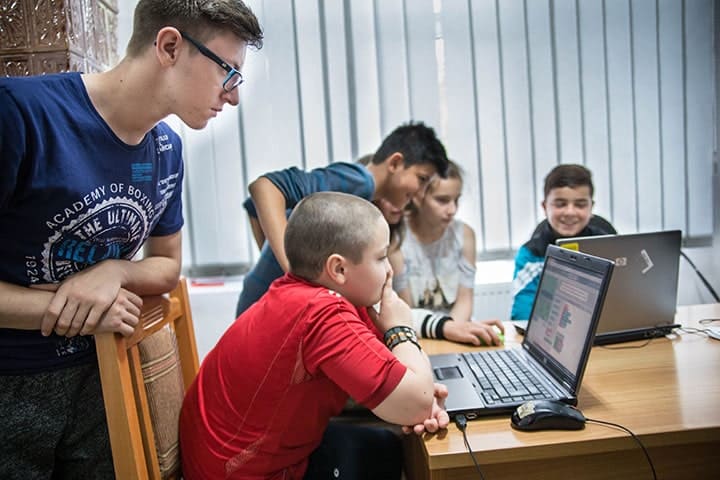
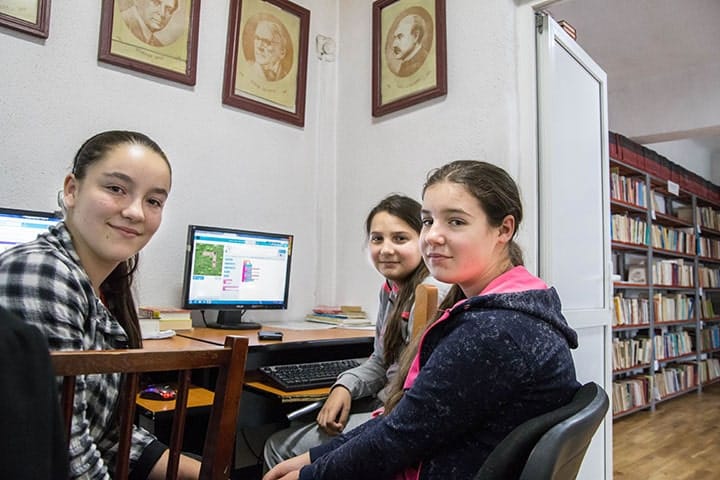
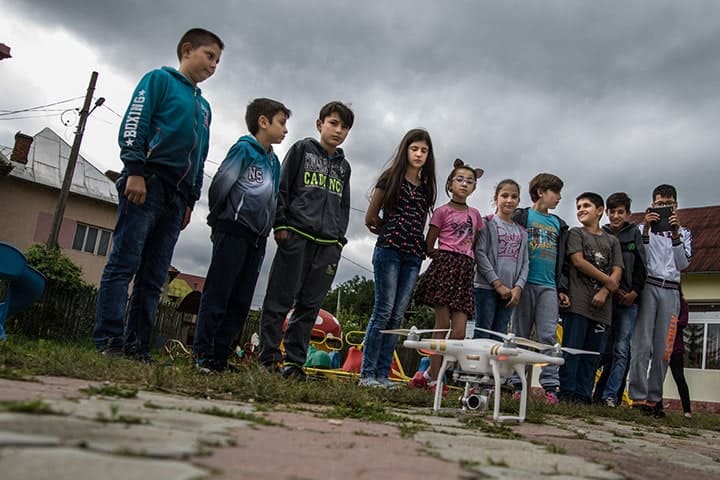
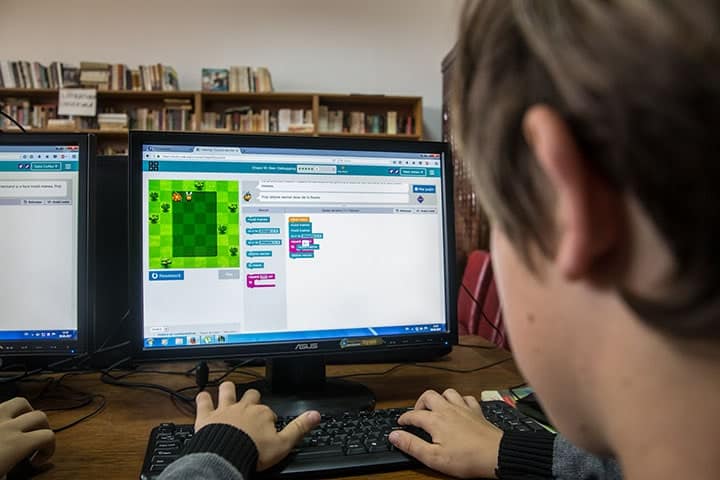
Since January 2017, Progress Foundation, Etic Association and 29 rural librarians, with the funding support and partnership of the Romanian American Foundation are developing the coding skills of over 450 kids from Romania. Coding for Kids in Libraries or shorter said CODE Kids has managed to bring together a large array of stakeholders and is due to continue after this pilot year.
It all started with an understanding and an acknowledgement: Romania has one of the fastest growing IT sectors in Central and Eastern Europe, however its education system and human resources development policies are far behind of what the economy needs. In 2014 for example, according to the Commission’s Directorate General for Communications Networks, Content & Technology (DG CONNECT), 23% of the EU population had no digital skills, while Romania’s number is 50% (the highest in Europe), and 85% of the Romanians had low digital skills. Also, by 2020, Europe may experience a shortage of more than 800,000 professionals skilled in computing/informatics. Coding skills will be a key factor to be able to contribute to the digitalized society of the future and a critical, minimum requirement to even have a job. The educational disparities between rural and urban are high in Romania, with almost 30% of kids from the rural areas failing to pass the exam which would allow them to register for high-school. At the same time, only 11% of Romania’s kids use internet in school for educational purposes, and are little knowledgeable about the development and learning opportunities it offers.
To mitigate this situation is a task beyond the capacity of two organizations or one funder, but one needs to start somewhere. Project partners decided to focus on secondary school kids from 10 to 14 years old and piloted an intervention method which included open source exercises, creative tasks, mentoring and local support as well as, gamification techniques. 35 public libraries (29 small libraries and 6 county libraries acting as educational hubs) are now involved as project strategic partners, making their spaces, IT infrastructure and staff available for its implementation. After 6 months, project evaluation results show a significant improvement in kids’ skills, a decrease of time they spend on internet as consumers of entertainment and an increase of time they spend for educational purposes, librarians are more confident in working with youth and, due to better communication, services they offer to kids are more diverse. At the same time, project partners have already witnessed some incipient community development initiatives (i.e. all 29 rural libraries from the project are now pinpointed in Google maps) and a game has been created by one of Code Kids.
Progress Foundation aims at starting a coding movement in rural libraries across Romania and within the next 3 years to have more than 200 clubs opened and more than 2000 kids with better IT skills, which could empower their communities. It takes a village to raise a child says an African proverb, and project partners would add to that: a lot of brave librarians, several committed partners and a generous vision, to start a major change in a country.
Începând din ianuarie 2017, Fundația Progress, Asociația Etic și 29 de bibliotecari rurali, cu susținerea Romanian-American Foundation, dezvoltă aptitudinile de programare la peste 450 de copii din România.
Totul a început de la înțelegerea faptului că România, deși are unul dintre cele mai rapide dezvoltări a sectorului IT din Europa centrală și de est, are politici depășite de dezvoltare în domeniile educației și a resurselor umane. De exemplu, în 2014 conform Directoratului General pentru Rețelele de comunicare, conținut și tehnologie al Comisiei Europene (DG CONNECT) 23% din populația UE nu are nici un fel de abilități digitale, în timp ce în România procentul era de 50% (cel mai mare din Europa) iar 85% dintre români au abilități scăzute. De asemeena, în 2020, Europa ar putea avea un deficit de mai mult de 800,000 de persoane pregătite în domeniul calculatoarelor și al informaticii. În viitor abilitățile de programare vor fi un factor cheie pentru a putea contribui la societate digitală și reprezintă cerințe minimale pentru a avea orice fel de slujbă. În România disparitățile existente în educație dintre zonele urbane și cele rurale sunt foarte mari; aproape 30% dintre copiii din zonlele rurare nu reușesc să treacă examenul de capacitate și să intre la liceu. În același timp numai 11% dintre copiii din România folosesc internetul în școlile lor pentru scopuri educaționale și știu foarte puține lucruri despre oportunitățile de dezvoltare și învățare pe care acesta le oferă.
Două organizații sau un finanțator nu pot ameliora această situație dar trebuie început de undeva. Partenerii de proiect au hotârăt să se focuseze pe copii de 10-14 ani, din ciclul gimnazial și au pilotat o metodă de intervenție ce include exerciții deschise, teme creative, mentorat și susținere locală dar și tehnici de gamification. 35 de biblioteci publice (29 biblioteci mici și 6 biblioteci județene ca huburi educaționale) sunt acum implicate în proiect ca parteneri strategici care își pun la dispoziție spațiul, infrastructura IT și personalul în implementarea proiectului. După 6 luni rezultatele evaluării proiectului arată o îmbunătățire semnificativă a abilităților digitale ale copiilor, o scădere a timpului pe care îl petrec pe internet ca simpli consumatori și o creștere a timpului petrecut pentru scopuri educaționale; bibliotecarii sunt mai încrezători în abilitățile lor de a lucra cu tinerii și, datorită unei mai bune comunicări, serviciile pe care le oferă copiilor sunt mai diverse. În același timp, partenerii de proiect au observat că au început să apară în formă incipientă inițiative de dezvoltare comunitară (de exemplu toate cele 29 de biblioteci din proiect sunt acum localizate și marcate pe hărțile Google) și un joc creat de un participant la Code Kids.
Fundația Progress dorește să pornească o mișcare de învățare a programării în bibliotecile rurale din întraga Românie și în următorii 3 ani să aibă mai mult de 200 de cluburi deschise și mai mult de 2000 de copii cu abilități IT îmbunătățite care să contribuie la întărirea comunităților lor. Un proverb african spune că e nevoie de un sat întreg pentru a crește un copil iar partenerii proiectului ar adăuga că e nevoie de mulți bibliotecari curajoși, câțiva parteneri implicați și o viziune generoasă, pentru a începe o schimbare majoră într-o țară.