Since 2015, Europe has seen the arrival of an almost unprecedented number of people fleeing war and poverty. A particularly large number of them have come to Germany, with over a million registrations for asylum, and almost half a million more applications in 2015 alone. Between 2015 and 2017, the city-state of Hamburg in particular, with a population of around 1.83 million, received around 66,000 refugees. They have added to an already diverse population, with over a third – and almost a half according to some estimates – coming from migrant backgrounds.
For these newcomers, a key priority after shelter, food and medical care is language acquisition. Yet many have no way of attending language classes as they are often expensive and not open to all refugees and migrants. This is where libraries can make the difference.
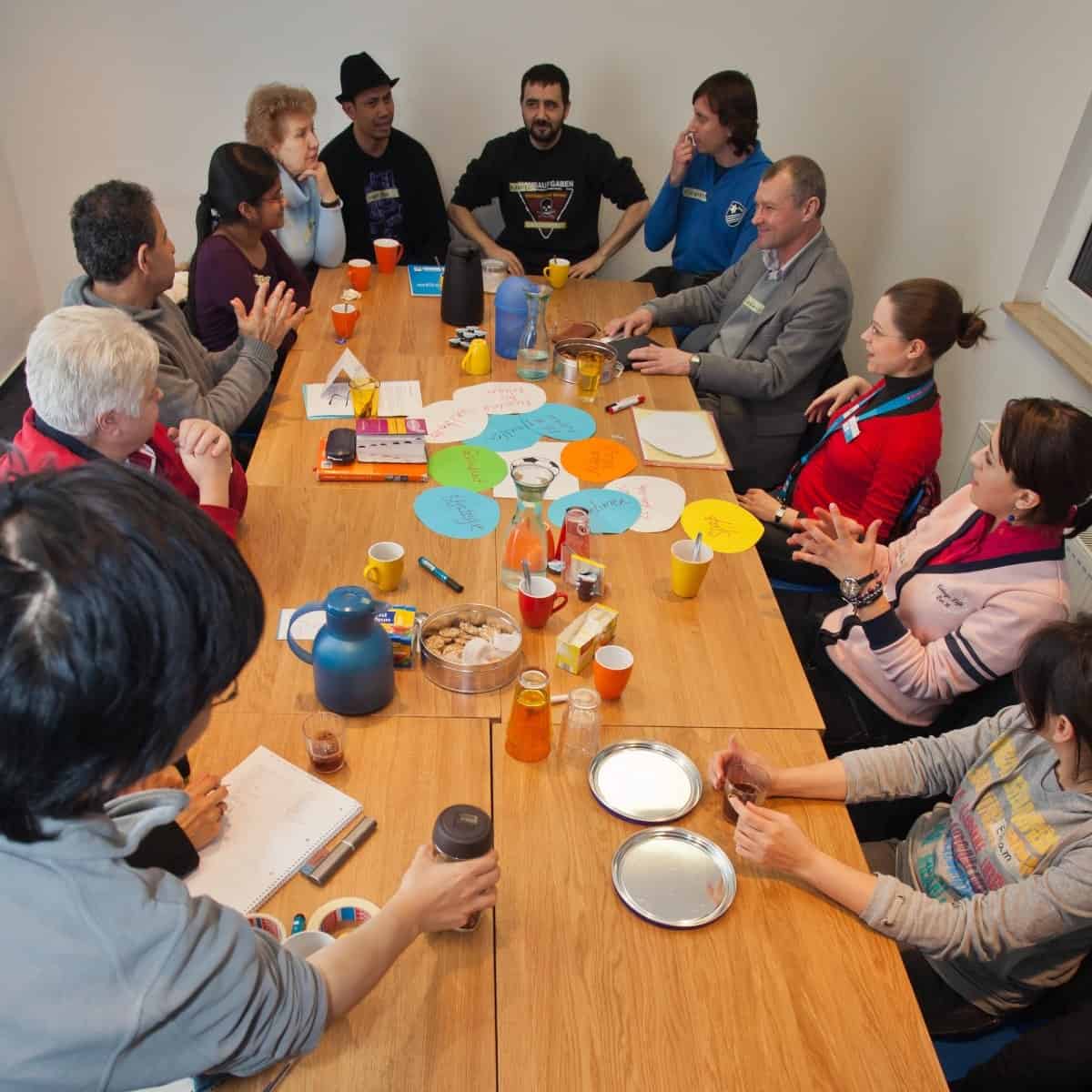
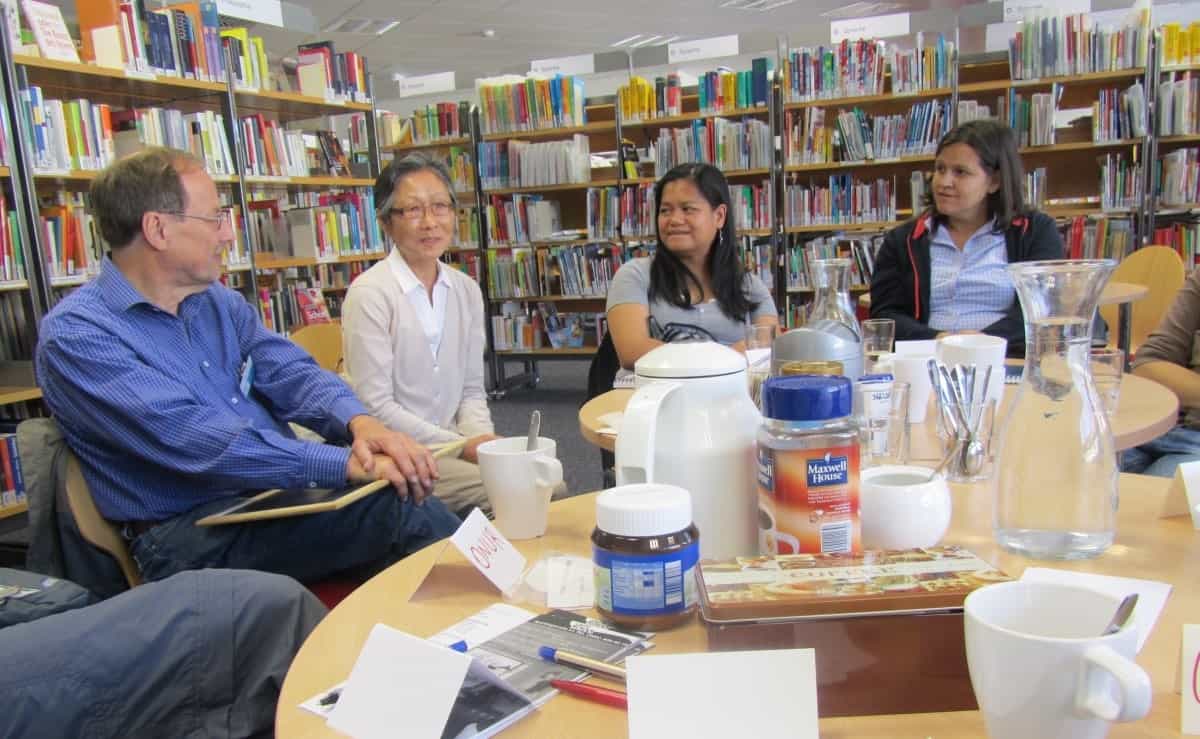
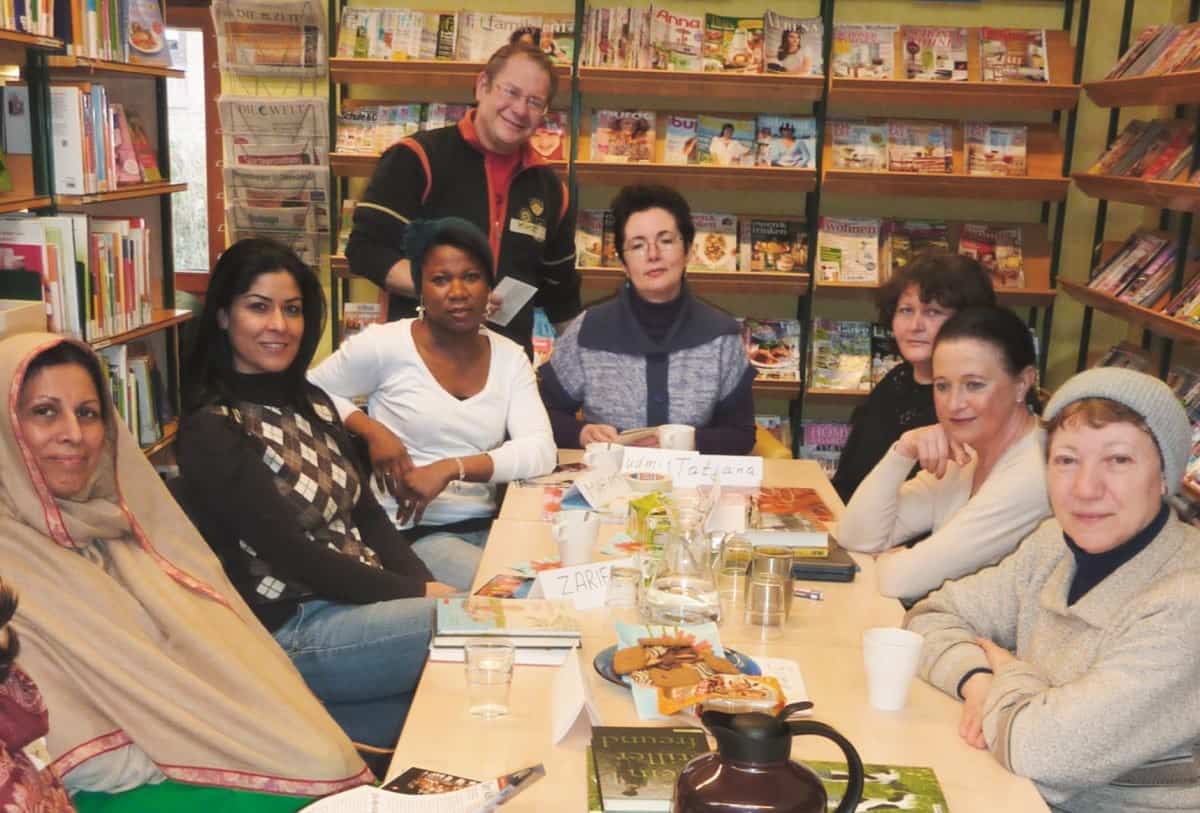
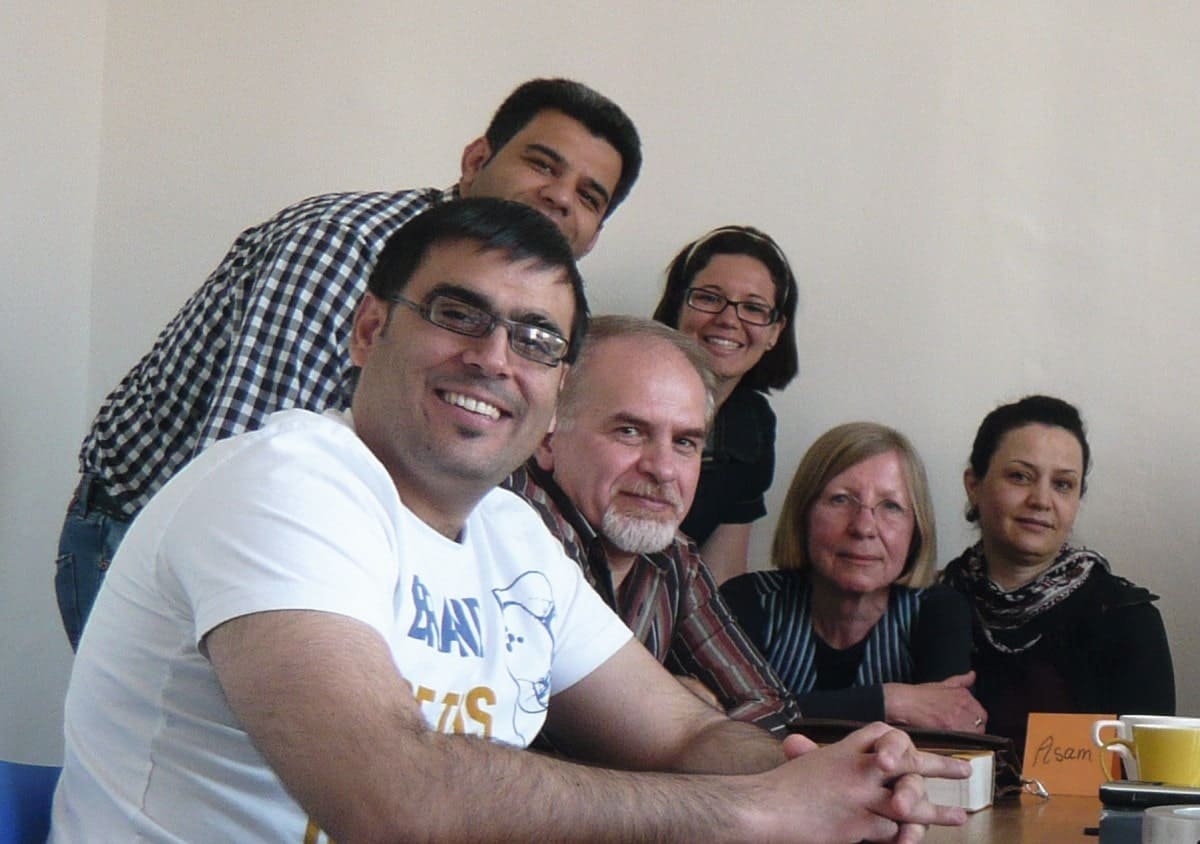
As a key part of the city’s ‘Refugee Help Forum’, the Hamburg Public Library System, Bücherhallen Hamburg, joined forces with the as the Volkshochschule adult education centre to support refugee language acquisition. Bücherhallen Hamburg do this through their ‘Dialog in Deutsch’ volunteer project, which is the largest volunteer language acquisition project in Hamburg. Through 109 conversation groups across 33 libraries, refugees and migrants are able to apply and practice their German speaking skills.
The groups are open and free of charge and are currently run by around 270 volunteers; no enrolment or registration is required. The ‘Dialog in Deutsch’ volunteers do not give language lessons, do not hold tests but rather gives topics to discuss during a ‘Dialog in Deutsch’ session to enhance the oral skills.
Every year around 40,000 participants, of all migrant backgrounds benefit from the ‘Dialog in Deutsch’ conversation groups. In order to meet the dramatic increase in demand of refugees and migrants, 25 groups especially for beginners had been added in 2016 and 2017.
To support the language acquisition, the library also expanded its media collection to include books for children and young adult in Arabic, boxes of games, dictionaries, board books, and other materials for learning German.
In addition, the library introduced a scheme using donations to allow refugees to gain access to varied library e-media services and WiFi. This provides a key means of keeping in contact with family and friends, especially given that many accommodation facilities do not have WiFi access. A generous donation by the Alfred Toepfer Stiftung F.V.S. in late 2014 has been central to making this possible.
Meanwhile, 600 professionally trained and supervised volunteers work in the Bücherhallen and play a key role in integrating refugees in other areas.
The ‘Dialog in Deutsch’ program is ongoing, and the library now participates in the federal volunteer service programme “Welcome for refugees”. Some of the refugees, after participating in this special programme, continued their professional integration by working in the library or other institutions. An evaluation of ‘Dialog in Deutsch’ is planned for 2019 in cooperation with the University of Hamburg in order to measure the impact of ‘Dialog in Deutsch’ for the participants.
In this way, the library is helping to create an atmosphere of learning and working for immigrants and provide full access to information in Hamburg.