In July 2017, responding to the call of the 2030 Agenda, the Government of Costa Rica issued a National Policy on Social Responsibility, detailing social responsibility as an essential element of organisational management within the public and private sectors. The government has committed to social, environmental, and economic sustainability and responsible management, as well as promoting voluntary initiatives and government measures to guarantee them.
In February 2018, the Minister of the Environment and Energy along with leaders who make up the National Environmental Council officially presented the first Report on the State of the Environment of Costa Rica. This document reported that Costa Rica’s ecological footprint is reaching worrying levels, with studies indicating it is 8% above what the territory can replenish.
To mitigate these levels and other problematic environmental trends, the government recommended steps to be taken: Promoting green and organic markets, increasing the number of electric cars and bicycle paths, and certifying sustainable tourism. The report also highlighted the need to strengthen environmental education at all levels and to modify consumption habits and priorities to align with good environmental practices.
These recommendations moved the Costa Rican Association of Librarians, COPROBI (Colegio de Profesionales en Bibliotecología de Costa Rica) to approve its first Social Responsibility Programme (Programa de Responsabilidad Social, PRS-COPROBI) in 2019, which included a number of activities dedicated to environmental awareness and improvement. In that same year, two of three social responsibility events were held, aimed at solving the community’s environmental challenges.
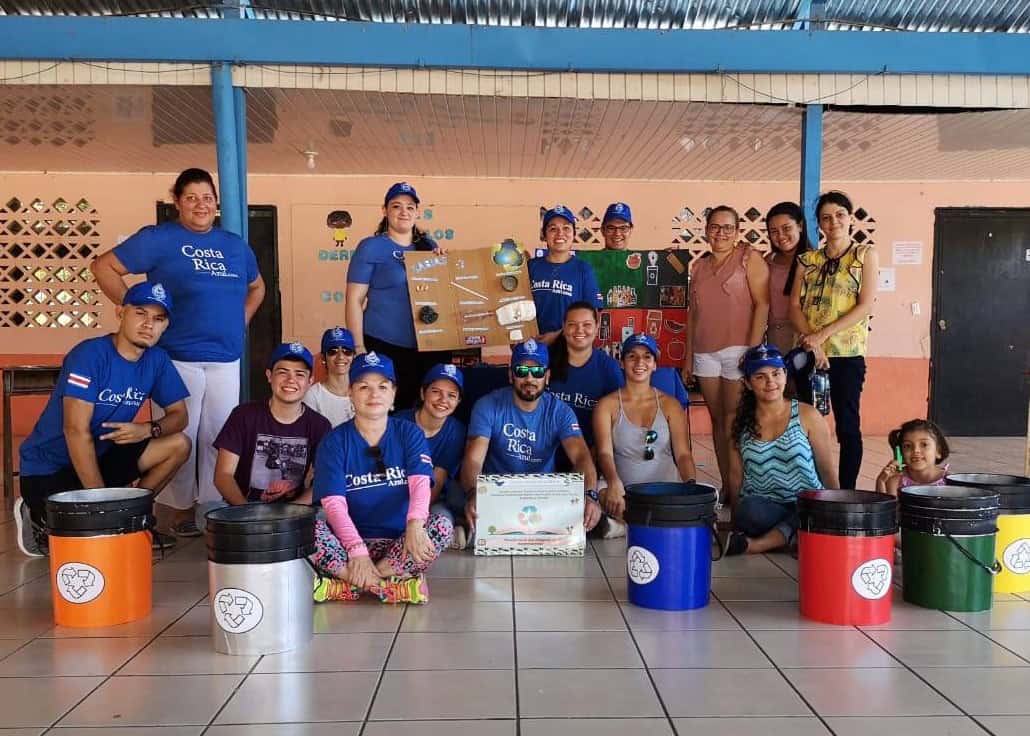
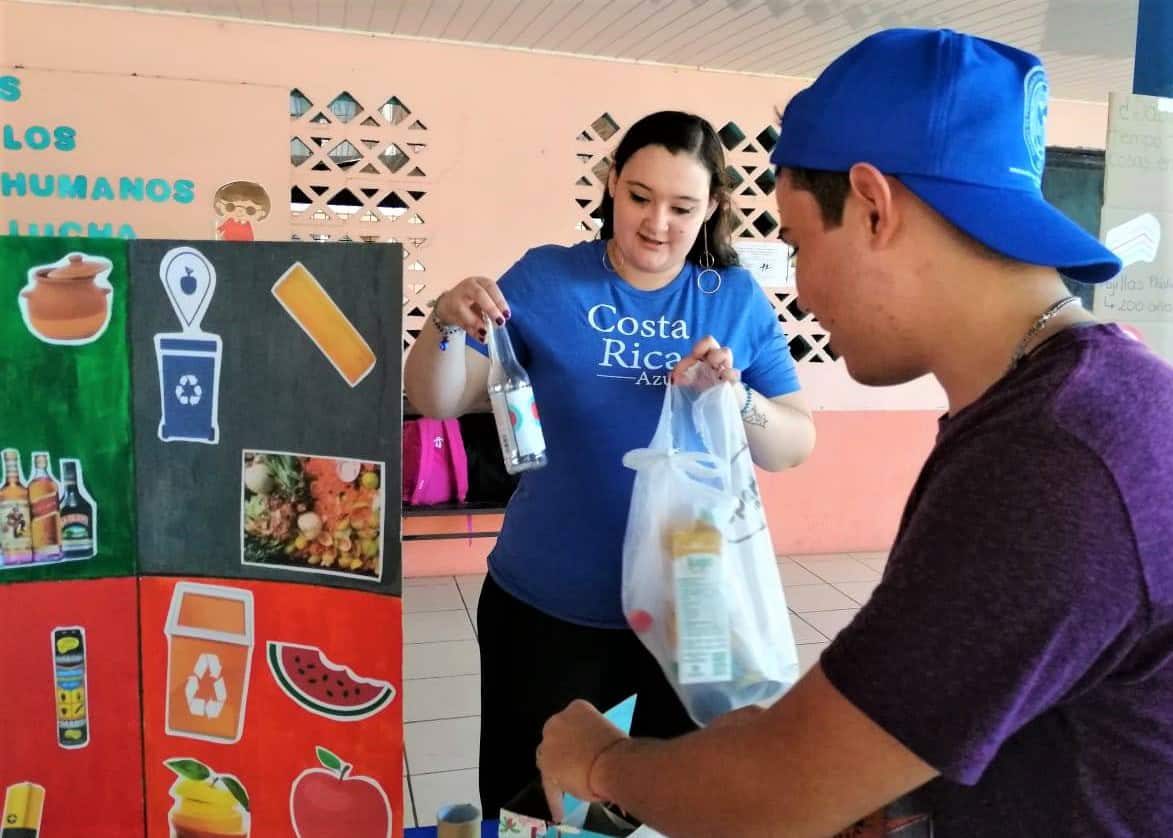
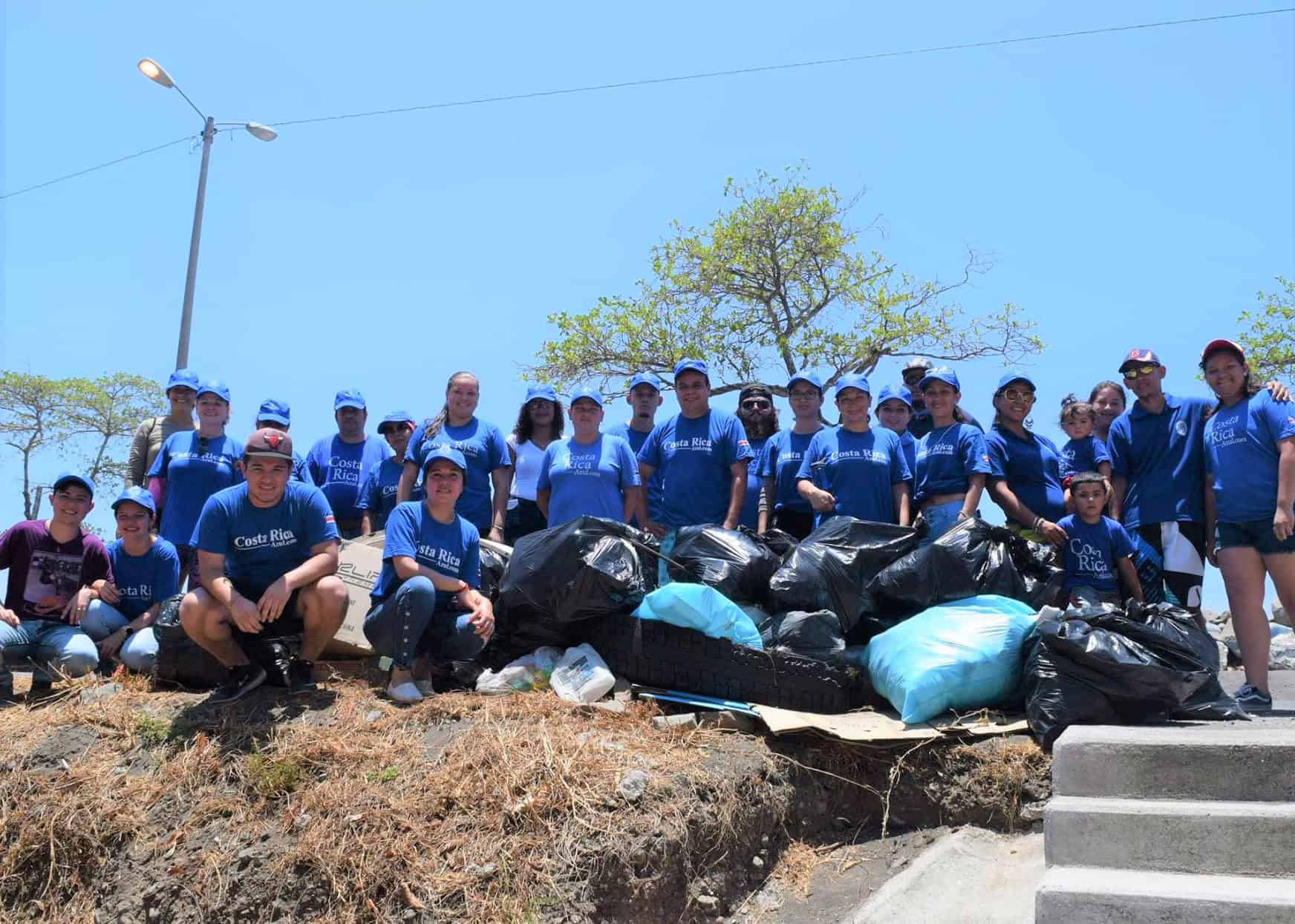
In March 2019, COPROBI carried out a project to clean the beach in Caldera, Puntarenas, a town with a population of 10,500 inhabitants. 3,000 kilograms of garbage (about 300 garbage bags) were removed from the beach. During the event, they also distributed recycling and waste-sorting information throughout the community. There was a workshop on making crafts from recycled materials, with 50 community members and librarians participating.
Seidy Villalobos Chacón, a school librarian, recalled an exchange with a community member at the event: “I remember, when we were collecting garbage around the beach, a young woman from the community approached us and asked if we are going to continue visiting them to help clean the beach. It was then that we took the opportunity to tell her more about the goals of that Sunday. We disseminated information about recycling and sorting waste. Everyone – the shopkeepers, the fathers, the mothers, the children, the passers-by, the community authorities – were all involved in this activity.”
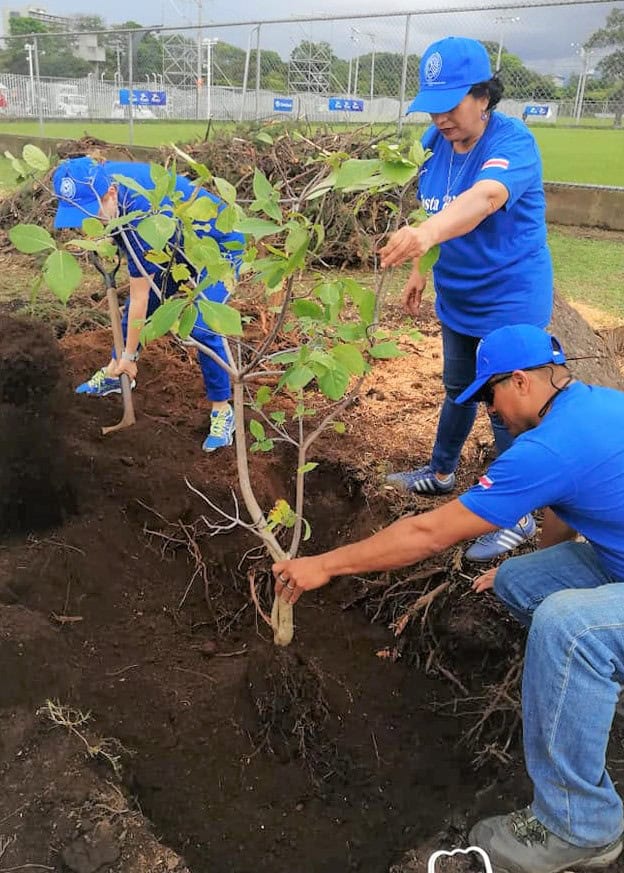
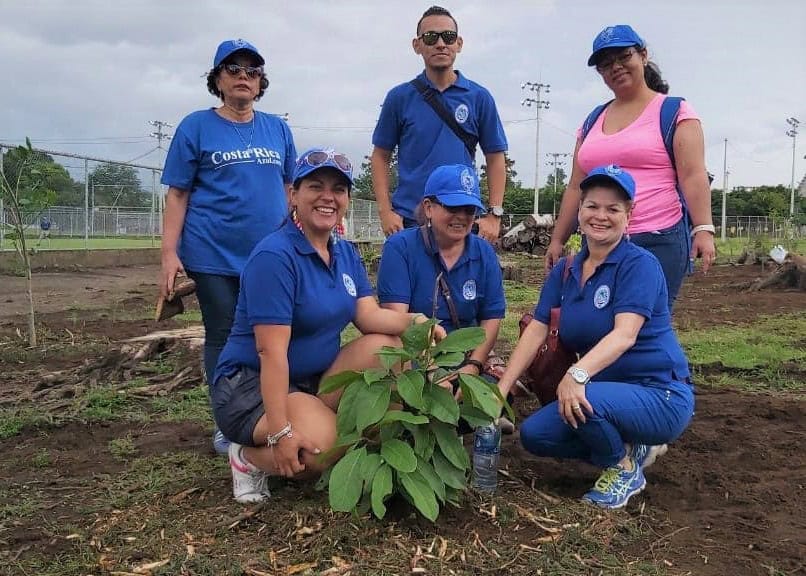
In September 2019, COPROBI joined the Ministry of Environment and the National Institute of Sports and other organisations in the planting of native trees in the Sabana Metropolitan Park in San José. The Sabana is a space for recreation and the lungs of the city of San José. Twenty-five librarians, together with the Board of Directors and the administrative staff of COPROBI, participated in the park improvement project. That day 250 trees were planted, completing the government’s long-term project of planting 5,000 native trees.
The Social Responsibility Programme has become a permanent feature at COPROBI. Through strategic alliances with universities, libraries, students and other community groups, along with private companies and civil society organisations, COPROBI looks forward to continuing the environmental guardianship of its waterways, recreational areas and parks.