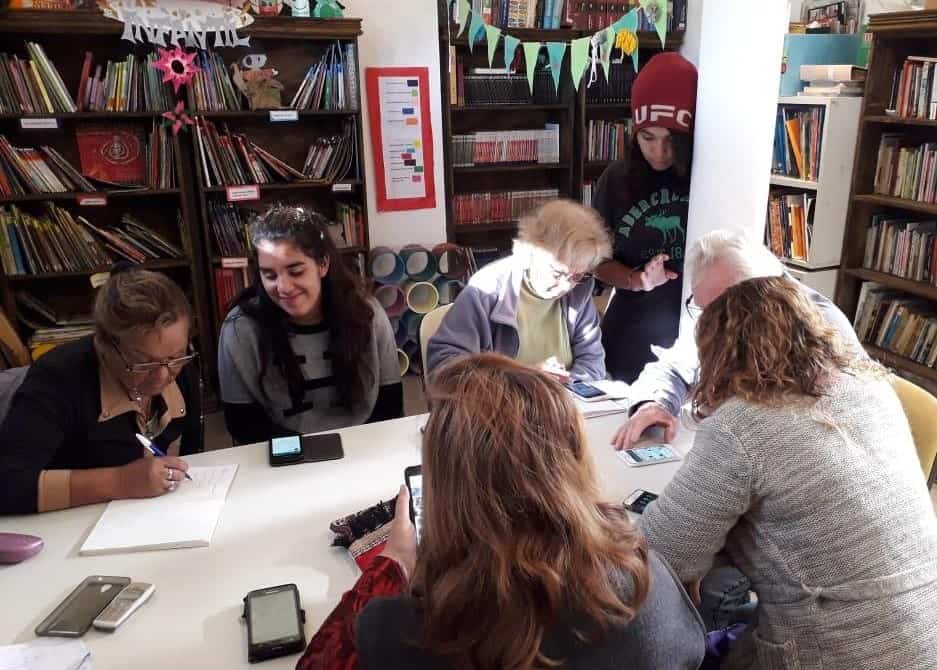
In early 2018, an elderly woman approached a librarian at the Santa Clara del Mar Municipal Library, “General José de San Martín,” to ask a question about technology. Unexpectedly, a boy who was in the library at the time responded to and solved her problem. This event sparked the beginning of the programme, Conectándonos en la Biblio (Connecting in the Library), which brings together teens aged 14 to 18 with seniors 65 and older.
The small town of Santa Clara del Mar, Argentina, has a population of 12,000 inhabitants, with 30% aged 65 or older. This group of seniors lacked the technical skills needed to maintain communication with their children and grandchildren who live outside of the area, e.g., using a smartphone or navigating social networks.
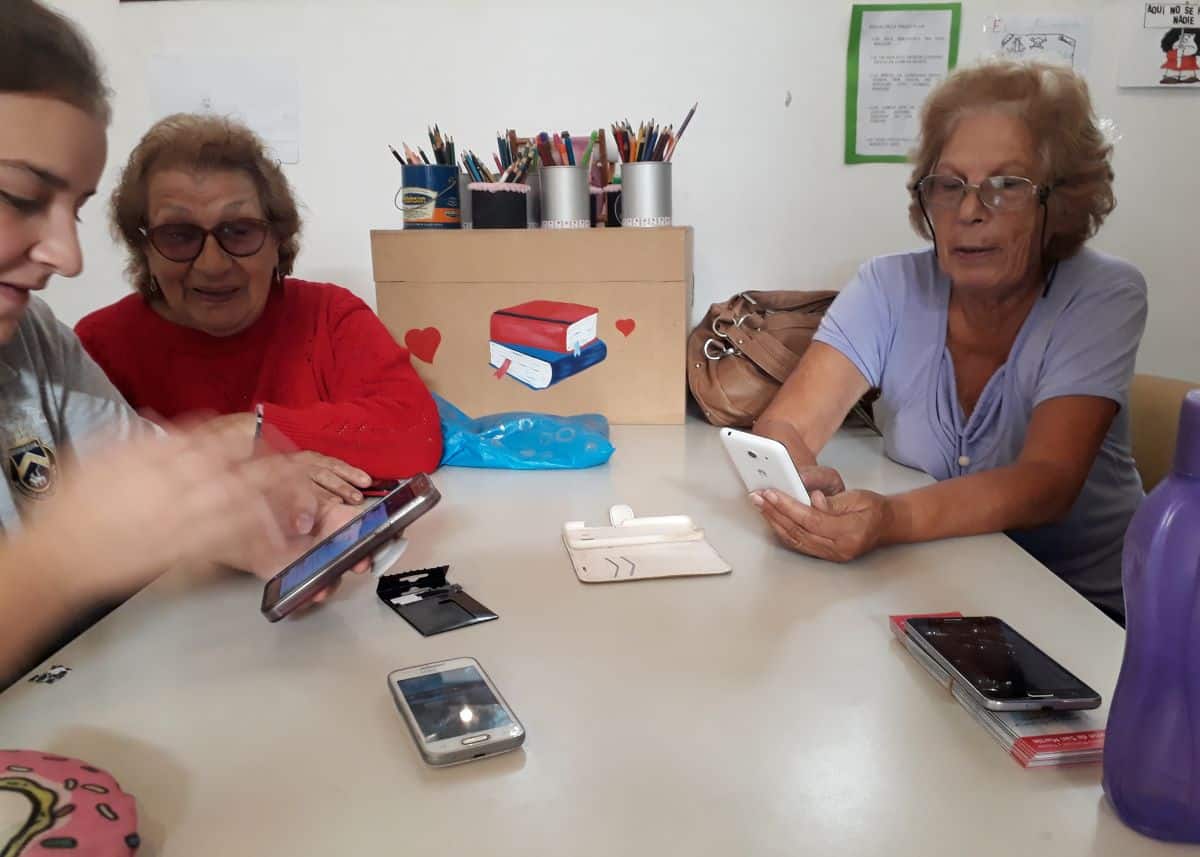
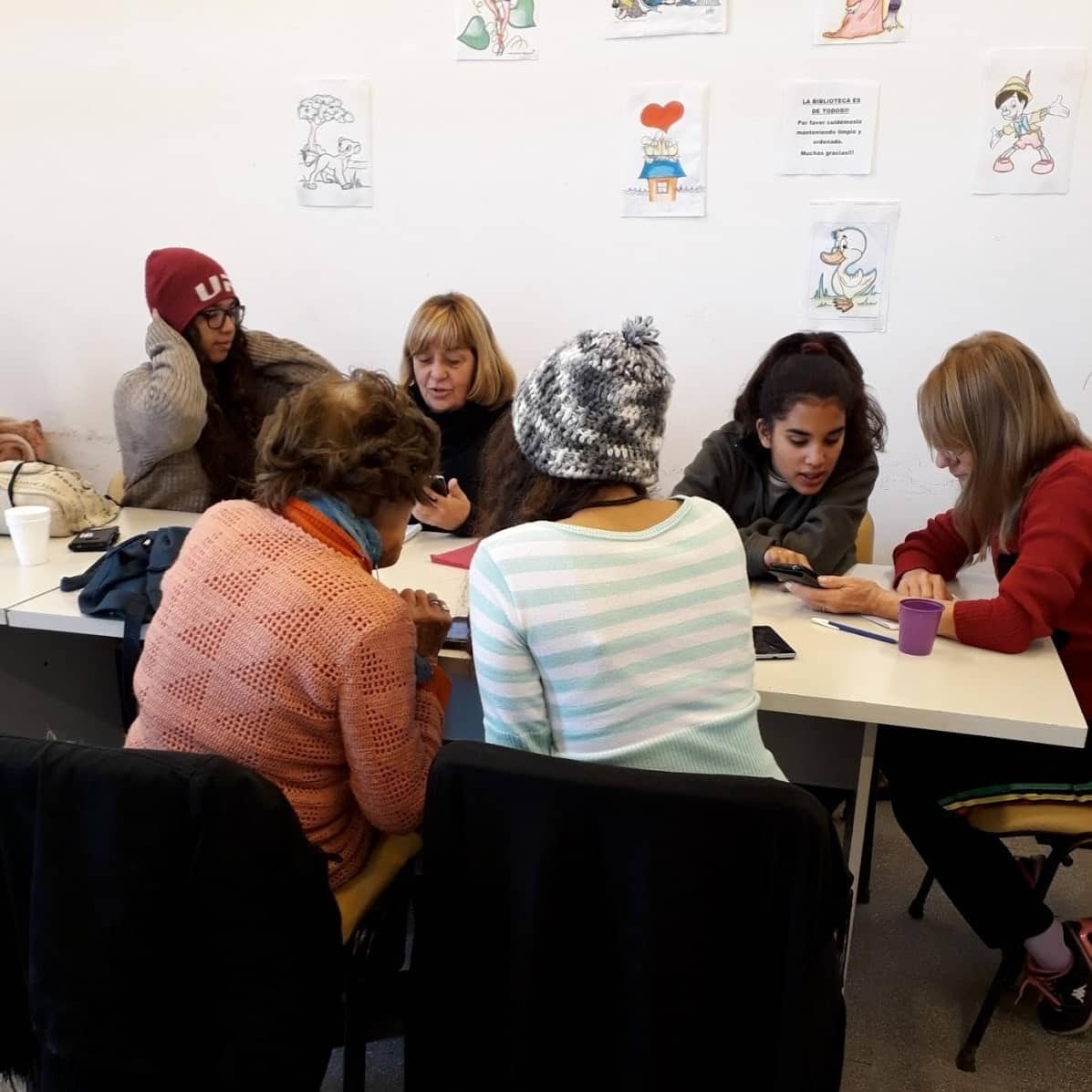
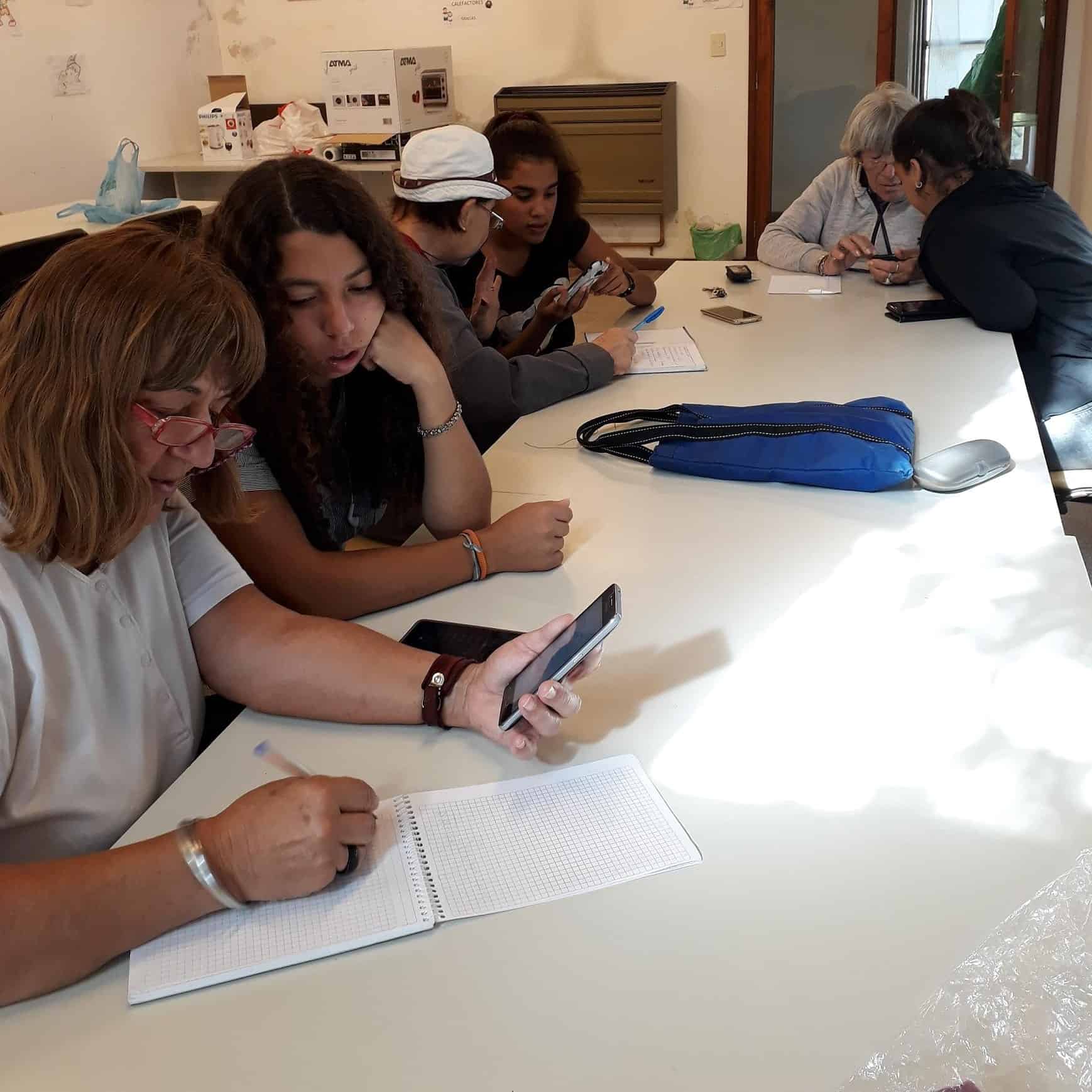
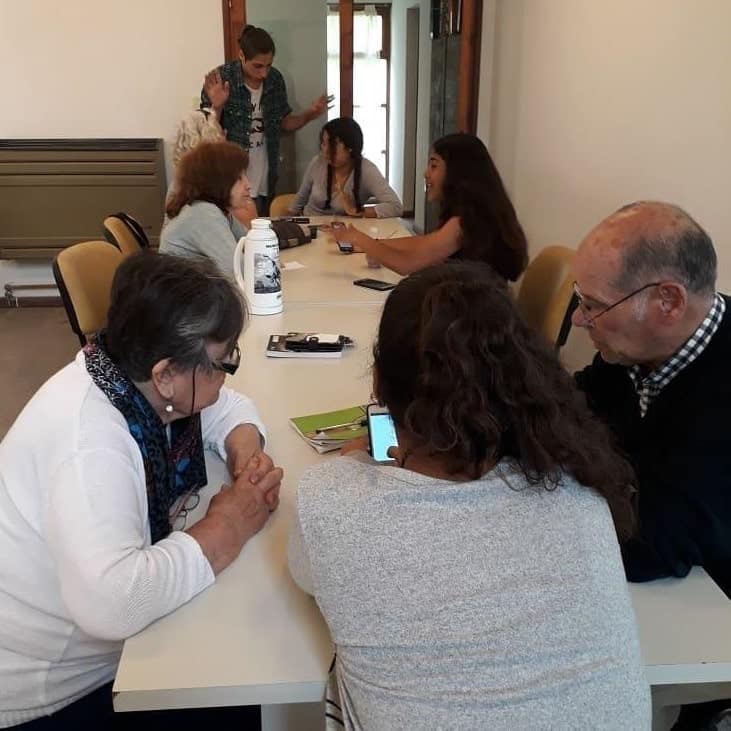
Every Tuesday and Thursday, five teenagers come to the library to teach technology skills to the community’s elderly. Since the beginning of this initiative, more than 50 seniors have increased their use of technology through participation in the programme.
During small group instructional sessions, elders become students and the young people their teachers. The programme participants learn how to make audio and video calls, take and upload photos to social networks, record voice notes on WhatsApp, among other skills. After the sessions, the tutors keep online communication open with their trainees, which encourages the seniors to practice their new skills.
A librarian shared how the programme has boosted the seniors’ self-esteem: “One day an elderly woman recorded and sent an audio message for the first time to her daughter who lives far away. She was so thrilled, and her eyes were full of tears. It was a very special moment for us all. They are learning things that for some may seem small, but for others are very important.”
In addition to improving participants’ technological skills, the initiative has also improved relationships between generations and created friendships between students and teachers. An added value for seniors is having someone to talk to socially, reducing their feelings of isolation and loneliness. The programme has challenged ageist stereotypes and changed perceptions on both sides.
As part of the programme’s evaluation, the library asked its participants to share their testimonials as WhatsApp audio messages. The responses served as evidence of acquired skills and showed how significantly the programme impacted elderly people’s lives. One of the participants, Graciela, eagerly expressed her appreciation: “The programme is a fantastic idea and I’m eternally thankful to the library. No one at home had the patience to teach me how to use a smartphone. I learnt a new language of technology but also had a place to socialise and make connections.”
Norma, a 68-year-old participant, shared her highlights from the programme: “The girls who taught us had a lot of patience and answered all my questions. Before the project, I felt like an analphabetic and I was afraid of technologies, but now I can independently use a smartphone. I learned how to send texts, audio messages and how to chat. It was an incredible project. The youngsters had a lot of love and patience working with us. I want to go back because I miss the experience.”
The work of the volunteer teachers was recognised by the Ministry of Culture for its impact on the town’s community. In April 2019, the library and the volunteers were awarded a certificate and medal recognising their collaboration and dedication.