Among the 17 SDGs, there is one in particular that is of great relevance to Colombia. The current historical moment obliges us to focus on the peace process that the Colombian government is advancing with the FARC-EP guerrilla, which has achieved important results in the country, especially in rural areas who suffered from the armed conflict during more than 53 years. The Peace Agreement with the FARC-EP has incentivized actions for the fulfilment of SDG 16, which seeks to promote peaceful and inclusive societies.
Libraries in general, and especially public libraries, play an important role in the post-conflict. Many places that were once subjected to violence, or threatened by urban structures of guerrillas or common crime, have been transformed by the creation of libraries linked to reading plans of local, regional and national governments, generating in the communities new dynamics driven by the strength of culture, thus allowing “the recovery of hope to restore their lives, their dignity as persons, the creation of security opportunities and the return of confidence in the social environment” (Jaramillo , 2012: 78).
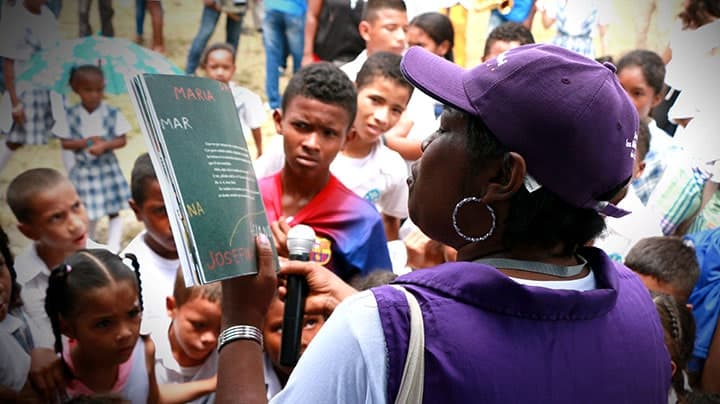
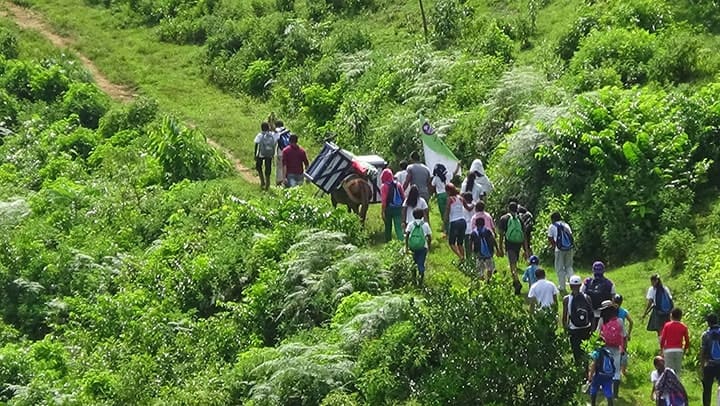
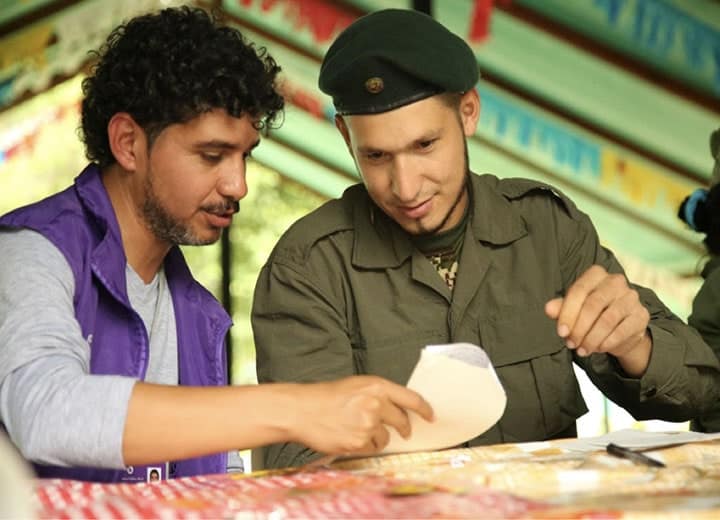
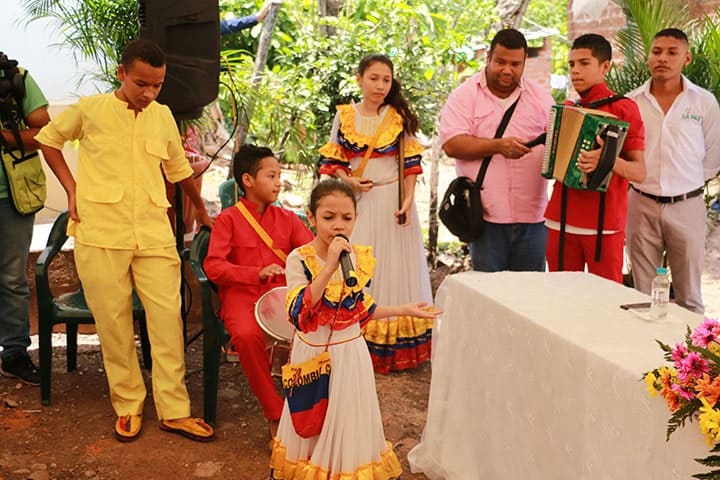
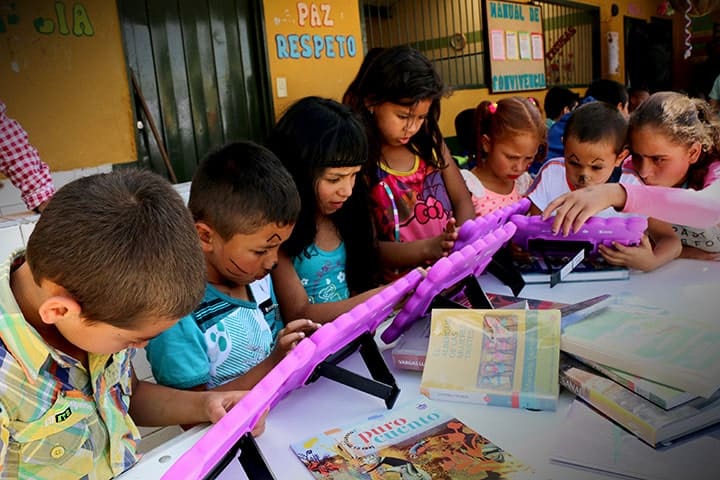
The Mobile Public Libraries Project (BPM) is an important social and cultural initiative led by the Ministry of Culture, the National Library and the National Network of Public Libraries of Colombia, in partnership with the French NGO Libraries Without Borders (international organization with wide experience in the creation of library scenarios in vulnerable communities of the world or in contexts of crisis), which takes place in the context of the Colombian post-conflict. It consists on the commissioning of 20 Mobile Public Libraries (Public Libraries of the Peace) in 20 out of 26 country side Zones or Transitory Normalization Points (ZVTN – PTN) of the Peace Agreement, which are temporary, defined and agreed on areas between the National Government and the FARC-EP to carry out the process of leaving the guerrilla arms and start their transition to legality. With the implementation of the Mobile Libraries for Peace, the aim is to extend the scope of library services to these rural areas of difficult access, where, due to situations associated with the conflict, the State had not been able to be present with cultural processes of this magnitude: it is essential to highlight that The Public Mobile Libraries Project was the first government initiative to reach the ZVTN and PTN, together with the Office of the High Commissioner for Peace.
This Project seeks to contribute to the construction of peace in the communities it serves, promoting social capital through library services and culture, and contributing to the reintegration of ex-combatants of the FARC into civilian life. In order to achieve these objectives, we started from the premise that culture has an enormous potential to reconstruct, shape and expand social capital, understood as the degree of trust existing among social actors, the respect of civic rules and the level of associativity. The Mobile Public Libraries in these territories historically affected by the conflict seek to generate trust in the communities socially and from the culture, to promote dialogue and encounter, to enable community participation and to bring to the territories an important institutional offer of the national government.